
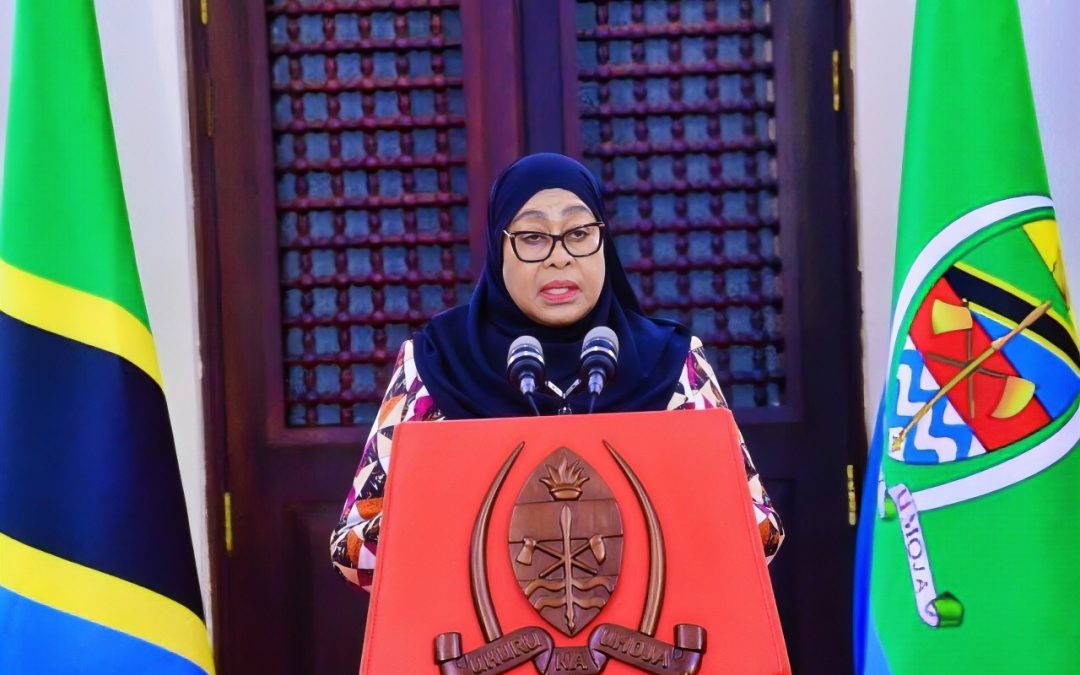
A New Dawn for Tanzania: President Samia Unveils a Cabinet Poised for Progress
In a definitive move shaping the nation’s trajectory, Her Excellency President Samia Suluhu Hassan has unveiled a reconfigured and robust Cabinet for the United Republic of Tanzania. Announced on 17th November 2025, this strategic reshuffle establishes 27 ministries and appoints a 56-strong team of ministers and deputy ministers, marking a pivotal moment in Tanzania’s governance. The new structure is a powerful embodiment of the President’s “Kazi Iendelee” philosophy, skilfully blending the steady hand of experienced administrators with the invigorating perspective of new appointees. With landmark changes including the creation of a standalone Ministry of Youth Development under the President’s Office, a refocused Ministry of Labour, Employment, and Relations, and a sharpened emphasis on economic stewardship and social cohesion, this cabinet is a clear blueprint for Tanzania’s future. This article provides a comprehensive analysis of the full list of appointments, including key figures such as Finance Minister Khamis Mussa Omar and Youth Development Minister Joel Arthur Nanauka, explores the strategic rationale behind the ministerial realignments, and considers what this means for the nation’s continued development and the lives of its citizens.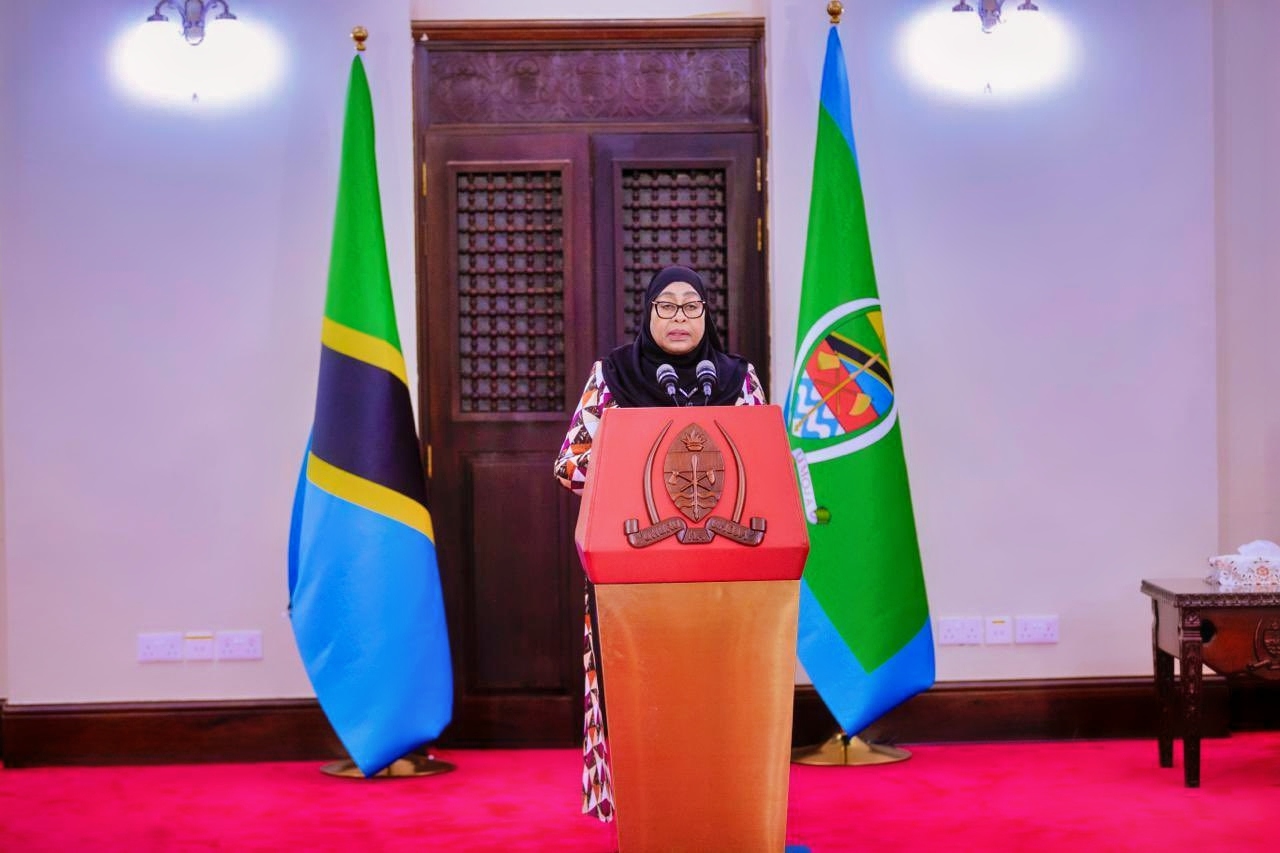
Twenty Key Points from Tanzania’s New Cabinet Structure:
-
A Cabinet for the Future: President Samia’s Timely and Strategic Assemblage
In the dynamic landscape of Tanzanian politics, where the pace of development is a key measure of a government’s efficacy, President Samia Suluhu Hassan’s announcement of her new cabinet was more than a routine administrative act; it was the deliberate unveiling of an engine room for national progress. The phrase “A Cabinet for the Future” encapsulates perfectly the strategic foresight and sense of urgency embedded in this move.
The Imperative of Timely Action
During her address, the President recalled her recent speech in Parliament, where she promised not to tarry in forming her cabinet. By presenting this list with expediency, she has done more than just keep her word; she has demonstrated a leadership style that values momentum. In governance, as in business, delays can be costly. The prompt appointment of a full cabinet ensures that there is no political vacuum at the highest levels of decision-making. It sends a clear signal to the civil service, international investors, and Tanzanian citizens that the machinery of government is fully operational and poised to deliver on its agenda. It affirms the President’s “Kazi Iendelee” (Let the work continue) philosophy, transforming it from a slogan into a tangible reality.
Strategic Composition: Beyond the Here and Now
What truly makes this a “cabinet for the future” is its structure. The President has not merely filled vacancies; she has reconfigured the very architecture of her government to face emerging challenges. The most telling example is the creation of a dedicated Ministry of Youth Development under the President’s Office. With over half of Tanzania’s population under the age of 25, this is not just a symbolic gesture. It is a profound recognition that the nation’s most valuable asset for the future is its youth. By giving them a full ministry with a direct line to the President’s Office, she is institutionalising their needs and aspirations, aiming to harness their potential for national development rather than see it as a challenge to be managed.
Furthermore, the reconfiguration of other ministries, such as the new focus on “Labour, Employment and Relations,” indicates a forward-looking approach to economic governance. It anticipates the need for sophisticated dialogue and partnership between government, the private sector, and labour unions to navigate the complexities of a modernising economy.
The Guiding Adage
A fitting Tanzanian adage for this moment is “Haraka haraka haina baraka” which, while literally translating to “hurry hurry has no blessing,” is a profound cultural reminder that rashness is counterproductive. However, this adage is complemented by the wisdom of “Fimbo ya mbali haiuwi nyoka” (A stick from afar does not kill a snake). The President’s actions reflect the latter. She has acted with speed, but not haste. The speed ensures the nation can confront its challenges head-on without delay, while the careful, strategic thought evident in the ministry configurations and appointments provides the necessary precision to strike true. It is the balance between urgency and deliberate planning that defines a government built for the long term.
The Architects of the Future: The Full List of Appointments
The following individuals have been entrusted to translate this vision into reality:
Under the President’s Office:
-
Public Service Management and Good Governance:
-
Waziri: Mhe. Ridhiwani Jakaya Kikwete
-
Naibu Waziri: Mhe. Regina Ndege Qwaray
-
-
Planning and Investment:
-
Waziri: Mhe. Prof. Kitila Alexander Mikumbo
-
Naibu Waziri: Mhe. Pius Stephen Chaya
-
-
Youth Development:
-
Waziri: Mhe. Joel Arthur Nanauka
-
Under the Vice President’s Office:
-
Union and Environment:
-
Waziri: Mhe. Mhandisi Hamad Yusuf Masauni
-
Naibu Waziri: Mhe. Dkt. Festo John Dugange
-
Under the Prime Minister’s Office:
-
Policy, Parliament, Coordination and the Disabled:
-
Waziri: Mhe. William Vangimembe Lukuvi
-
Naibu Waziri: Mhe. Ummy Hamisi Nderiananga
-
-
Labour, Employment and Relations:
-
Waziri: Mhe. Deus Clement Sangu
-
Naibu Waziri: Mhe. Rahma Riadh Kisuo
-
-
Regional Administration and Local Government (TAMISEMI):
-
Waziri: Mhe. Prof. Riziki Silas Shemdoe
-
Naibu Waziri (Education): Mhe. Reuben Nhamanilo Kwagilwa
-
Naibu Waziri (Health): Dkt. Jafar Rajab Seif
-
Standalone Ministries:
-
Finance:
-
Waziri: Mhe. Balozi Khamis Mussa Omar
-
Naibu Waziri: Mhe. Laurent Deograttus Luswetula
-
Naibu Waziri: Mhe. Mshamu Ali Munde
-
-
Foreign Affairs and East African Cooperation:
-
Waziri: Mhe. Balozi Mahmoud Thabit Kombo
-
Naibu Waziri: Mhe. Dkt. Ngwaru Jumanne Maghembe
-
Naibu Waziri: Mhe. James Kinyasi Millya
-
-
Home Affairs:
-
Waziri: Mhe. Boniface George Simbachawene
-
Naibu Waziri: Mhe. Denis Lazaro Londo
-
-
Agriculture:
-
Waziri: Mhe. Daniel Godfrey Chongolo
-
Naibu Waziri: Mhe. David Ernest Silinde
-
-
Water:
-
Waziri: Mhe. Jumaa Hamidu Aweso
-
Naibu Waziri: Mhe. Kundo Andrea Mathew
-
-
Defence and National Service:
-
Waziri: Mhe. Dkt. Rhimo Simeon Nyansaho
-
-
Construction:
-
Waziri: Mhe. Abdallah Hamis Ulega
-
Naibu Waziri: Mhe. Mhandisi Godfrey Msongwe Kasekenya
-
-
Transport:
-
Waziri: Mhe. Prof. Makame Mbarawa Mnyaa
-
Naibu Waziri: Mhe. David Mwakiposa Kihenzile
-
-
Industry and Trade:
-
Waziri: Mhe. Judith Salvio Kapinga
-
Naibu Waziri: Mhe. Patrobas Paschal Katambi
-
-
Communication and Information Technology:
-
Waziri: Mhe. Angellah Jasmine Mbelwa Kairuki
-
Naibu Waziri: Mhe. Switbert Zacharia Mkama
-
-
Community Development, Gender, Women and Special Groups:
-
Waziri: Mhe. Dkt. Dorothy Onesphoro Gwajima
-
Naibu Waziri: Mhe. Maryprisca Winfried Mahundi
-
-
Health:
-
Waziri: Mhe. Mohamed Omary Mchengerwa
-
Naibu Waziri: Mhe. Dkt. Florence George Samizi
-
-
Education, Science and Technology:
-
Waziri: Mhe. Prof. Adolf Faustine Mkenda
-
Naibu Waziri: Mhe. Manu Hafidh Ameir
-
-
Lands, Housing and Human Settlements Development:
-
Waziri: Mhe. Dkt. Leonard Douglas Akwillapo
-
Naibu Waziri: Mhe. Kaspar Kaspar Mmuya
-
-
Natural Resources and Tourism:
-
Waziri: Mhe. Dkt. Ashatu Kachwamba Kijaji
-
Naibu Waziri: Mhe. Hamad Hassan Chande
-
-
Information, Culture, Arts and Sports:
-
Waziri: Prof. Palamagamba John Kabudi
-
Naibu Waziri: Mhe. Hamisi Mwinjuma
-
Naibu Waziri: Mhe. Paul Christian Makonda
-
-
Livestock and Fisheries:
-
Waziri: Mhe. Balozi Dkt. Bashiru Ally Kakurwa
-
Naibu Waziri: Mhe. Ng’wasi Damas Kamani
-
-
Minerals:
-
Waziri: Mhe. Anthony Peter Mavunde
-
Naibu Waziri: Mhe. Dkt. Steven Lemomo Kiruswa
-
-
Energy:
-
Waziri: Mhe. Deogratius John Ndejembi
-
Naibu Waziri: Mhe. Salome Wycliffe Makamba
-
-
Constitution and Legal Affairs:
-
Waziri: Mhe. Juma Zuberi Homera
-
Naibu Waziri: Mhe. Zainabu Athman Katimba
-
In conclusion, this “Cabinet for the Future” is President Samia’s definitive answer to the question of Tanzania’s trajectory. It is a team assembled not just to govern the present, but to actively build the foundation for a more prosperous, inclusive, and resilient Tanzania for generations to come. The nation now looks to this assembled body of leaders to deliver on the immense promise their appointments hold.
-
-
A Strategic Ministry for the Youth: Planting a Tree for Tanzania’s Future
In a move of profound strategic significance, President Samia Suluhu Hassan has elevated youth affairs from a departmental concern to the pinnacle of executive authority by creating a standalone Ministry of Youth Development, situated directly under the President’s Office. This is not a mere bureaucratic reshuffling; it is a landmark policy shift that recognises Tanzania’s most formidable asset and its most pressing imperative: its youth.
The Demographic Imperative
Tanzania has one of the youngest and most rapidly growing populations in the world. With a median age of around 19, and over 60% of its population under 25, the nation is experiencing a massive “youth bulge.” This demographic presents a dual-edged sword. On one hand, it offers an unparalleled demographic dividend—a vast, energetic workforce that can propel economic growth for decades if properly harnessed. On the other, it poses a significant risk; a generation of disenfranchised, underemployed young people can lead to social unrest and stymie development. The creation of this ministry is the government’s decisive move to seize the opportunity and mitigate the risk.
The Power of Presidential Proximity
Placing this ministry directly under the President’s Office is a masterstroke of administrative strategy. It sends an unequivocal message that youth development is not a side-lined issue, but a central pillar of national security and economic planning. This proximity ensures:
-
Direct Access: The Minister for Youth, Honourable Joel Arthur Nanauka, will have a direct channel to the highest level of decision-making, ensuring that youth concerns are not diluted as they pass through bureaucratic layers.
-
Policy Weight: Policies originating from this ministry will carry the implicit authority of the President’s Office, compelling other ministries to collaborate and prioritise cross-cutting youth initiatives.
-
Resource Priority: Being at the centre of power significantly enhances the ministry’s ability to argue for and secure the necessary budgetary allocations and resources to implement ambitious programmes.
From Potential to Productivity: The Mandate
The new ministry’s mandate will likely be comprehensive, moving beyond the traditional focus on sports and recreation to tackle the core challenges facing Tanzanian youth.
-
Employment and Entrepreneurship: The ministry will be expected to spearhead initiatives that bridge the gap between education and the job market. This includes promoting vocational training, supporting youth-led startups through access to capital and mentorship, and fostering entrepreneurship in the digital and creative economies.
-
Civic Engagement and National Identity: It will play a crucial role in channelling the energy and ideals of young people into constructive national development. This involves strengthening platforms for youth participation in governance and instilling a sense of patriotic responsibility.
-
Talent Development and Sports: While its scope is broader, the ministry will continue to nurture athletic and artistic talent, recognising sports and culture as viable career paths and sources of national pride.
-
Mindset and Behavioural Change: A key challenge is addressing societal attitudes and equipping youth with the skills, resilience, and work ethic required to succeed in a competitive global economy. The ministry will be at the forefront of driving this socio-cultural transformation.
A Guiding Adage
A very fitting Tanzanian adage for this initiative is “Kulia mwenda tezi si mwenda ngoma,” which translates to, “To cry for the one going to the market is not the same as crying for the one going to a dance.” This proverb underscores the importance of purposeful action over mere performance. In this context, the previous structure of youth development, often nested within larger ministries, could be considered the “mwenda ngoma”—lacking the urgency and focus the issue demands. The new, standalone ministry is the “mwenda tezi”—it has a clear, serious, and vital mission: to equip Tanzania’s youth not for a fleeting celebration, but for the serious business of building their own futures and that of the nation.
The Architect of the Vision
The responsibility to lead this critical ministry falls upon Honourable Joel Arthur Nanauka. Notably, he will not have a deputy minister, a decision that underscores the expectation for a lean, agile, and directly accountable leadership structure, with the minister personally answerable to the President.
In conclusion, the establishment of the Ministry of Youth Development is more than a policy—it is a statement of national intent. It is the institutional recognition that Tanzania’s future will be written by its youth. By giving them a dedicated, powerful ministry at the heart of government, President Samia is not just talking about investing in the next generation; she is building them a command centre from which to shape their own destiny. It is a bold and necessary investment, the fruits of which will be reaped by the nation for generations to come.
-
-
A Refocused Mission: The Strategic Reconfiguration of the Ministry of Labour, Employment, and Relations
In a nuanced but highly significant administrative recalibration, President Samia Suluhu Hassan has reconfigured the former Ministry of Labour, Youth, and Development into the new Ministry of Labour, Employment, and Relations. This is far more than a simple name change. It represents a sharpened strategic focus, acknowledging that in a rapidly evolving economy, the world of work requires dedicated, expert attention, distinct from the broader remit of youth development.
From a Combined Portfolio to a Specialist Focus
The previous structure bundled together the wide-ranging challenges of youth with the specific complexities of the labour market. While not without merit, this could lead to a dilution of focus. Youth development encompasses education, empowerment, sports, and civic engagement—a vast field requiring its own dedicated strategy, as now recognised by the new standalone Ministry of Youth Development.
By removing ‘Youth’ from its title, the ministry is now liberated to concentrate with laser-like precision on the core ecosystem of work. This reflects a modern understanding that job creation and stable industrial relations are specialised fields demanding undivided attention.
Decoding the New Title: A Tripartite Mandate
The new name—Labour, Employment, and Relations—signals a three-pronged, interconnected mission:
-
Labour: This foundational element concerns the legal and regulatory framework governing the workplace. It includes issues of workers’ rights, safety standards, minimum wage regulations, and working conditions. The ministry remains the custodian of the nation’s labour laws, ensuring they are fit for purpose in the 21st century.
-
Employment: This is the critical shift from a passive to an active function. The ministry’s role evolves beyond merely managing labour disputes to proactively catalysing job creation. Its mandate will now likely involve:
-
Bridging the Skills Gap: Working closely with the Ministry of Education and vocational training centres to align curricula with the actual needs of industries.
-
Employment Services: Strengthening national employment platforms and job centres to connect Tanzanian job seekers with opportunities more efficiently.
-
Promoting Formalisation: Developing policies that encourage the transition of workers from the informal to the formal economy, granting them greater security and benefits.
-
-
Relations: This is the most strategically potent addition. The term “Relations” formally embeds the concept of social dialogue at the heart of the ministry’s work. It refers to the tripartite relationship between government, employers (through their associations like the Employers’ Association of Tanzania), and workers (represented by trade unions like TUCTA).
-
The minister, Honourable Jus Clement Sango, and his deputy, Honourable Rahma Ahmad Riadh Kisuo, are now explicitly mandated to be chief arbiters and facilitators. Their success will be measured by their ability to build consensus, prevent industrial unrest, and foster a collaborative atmosphere where all parties work together to enhance productivity and national economic competitiveness.
-
The Guiding Adage
A very apt Tanzanian adage for this refocus is “Mkono mmoja haulei mtu,” which translates to, “One hand alone cannot bring up a child.” This proverb captures perfectly the essence of the new “Relations” component. The government alone cannot create a thriving economy with ample employment. Employers alone cannot ensure harmonious and productive workplaces. Workers alone cannot secure fair wages and conditions. It is the concerted, collaborative effort of all three—like two hands cradling a child—that will nurture and grow Tanzania’s prosperity. The new ministry is institutionalising this collaborative “handshake” as the preferred method of operation.
The Broader Implications for Tanzania
This reconfiguration aligns perfectly with Tanzania’s development ambitions and the President’s ethos of “Kazi Iendelee.” By creating a ministry solely dedicated to the health of the labour market, the government is sending a clear signal to investors that Tanzania is serious about fostering a stable, skilled, and productive workforce. It acknowledges that sustainable development is impossible without social peace between the key actors in the economy.
In conclusion, the creation of the Ministry of Labour, Employment, and Relations is a move of mature governance. It replaces a combined, sometimes overstretched portfolio with a streamlined, powerful entity equipped with a clear mandate: to not just manage labour, but to actively generate employment and, most importantly, to build the resilient relationships upon which Tanzania’s economic future depends.
-
-
The Crucial Role of “Relations”: Weaving the Fabric of a Collaborative Tanzania
In the meticulous redesign of Tanzania’s government machinery, the introduction of the “Relations” department within the Ministry of Labour, Employment, and Relations is perhaps the most nuanced yet transformative element. It moves the government’s role from that of a referee who only blows the whistle when rules are broken, to that of a master weaver, actively bringing together disparate threads to create a stronger, more resilient national economic fabric.
The Shift from Adjudication to Partnership
Traditionally, labour ministries in Tanzania and elsewhere have often been reactive, stepping in primarily to mediate strikes, settle disputes, or enforce labour laws. While this regulatory function remains vital, the new “Relations” mandate is fundamentally proactive. It is tasked with the continuous and vital work of building bridges, conducting pre-emptive dialogues, and fostering positive relationships before crises erupt. This signals a profound shift towards a collaborative model of governance, recognising that a nation’s economic health is dependent not just on rules, but on the quality of the relationships between its key players.
Who are the “Various National Stakeholders”?
The term “Relations” encompasses a strategic web of partnerships, primarily focusing on the tripartite plus model:
-
The Government: Represented by the ministry itself, setting national policy and ensuring a conducive legal environment.
-
Employers and Private Sector: Through bodies like the Confederation of Tanzania Industries (CTI) and the Employers’ Association of Tanzania (ATE). This relationship is about understanding the constraints to business growth, investment, and job creation.
-
Workers: Represented by trade unions, most notably the Trade Union Congress of Tanzania (TUCTA). This relationship focuses on fair wages, worker welfare, safety, and job security.
-
Other Key Stakeholders: This extends to civil society organisations, educational and vocational training institutions, and community groups, ensuring that the entire ecosystem supporting the workforce is aligned.
The “Vital Work” in Practice
The work of this department, under the leadership of Honourable Jus Clement Sango, will be the quiet, persistent engine of social dialogue. Its functions will include:
-
Facilitating Continuous Dialogue: Moving beyond emergency talks to establishing permanent forums and working groups where employers and unions can collaboratively address long-term challenges like skills development, technological change, and productivity.
-
Building Trust: A core function will be to repair and strengthen the trust deficit that can often exist between labour and capital. This involves ensuring all voices are heard and respected, creating an atmosphere where compromise is considered strength, not surrender.
-
Policy Co-creation: Instead of the government designing policies in isolation and imposing them, the “Relations” arm will facilitate a process where policies on minimum wage, social security, and workplace safety are shaped through consensus, making them more legitimate, practical, and sustainable.
-
Anticipating Conflict: By maintaining open channels of communication, the department can identify and defuse potential disputes—such as in the agricultural, manufacturing, or mining sectors—before they escalate into disruptive strikes or lockouts.
A Guiding Adage
A perfectly suited Tanzanian adage for this endeavour is “Umoja ni nguvu, utengano ni udhaifu” — “Unity is strength, division is weakness.” This proverb, deeply embedded in the national psyche, encapsulates the very essence of the “Relations” mandate. A nation where government, employers, and workers are pulling in different directions is weak and susceptible to economic stagnation and social unrest. However, a nation where these forces are united in purpose—like bundled sticks that cannot be broken—possesses an unshakeable strength. The “Relations” department is the tool meant to bundle these sticks together, creating a unified front to tackle Tanzania’s economic challenges.
The Broader Implication for Tanzania’s Development
For President Samia’s vision of a thriving, industrialising Tanzania to be realised, a stable and cooperative industrial landscape is non-negotiable. Investors, both domestic and foreign, are attracted to predictability and social stability. By institutionalising “Relations,” the government is making a powerful statement: Tanzania is committed to becoming a mature, sophisticated economy where social partnership is the bedrock of progress. It is an investment in social harmony, which is just as critical as an investment in infrastructure or energy.
In conclusion, the “Relations” component is not a mere appendage; it is the ministry’s new central nervous system for collaboration. It is a recognition that Tanzania’s future prosperity depends not only on how many jobs are created but on the quality of the dialogue, the strength of the partnerships, and the unity of purpose that underpins its entire world of work.
-
-
Re-aligned Regional Administration: Sharpening the Axe for Effective Service Delivery
In a strategic recalibration of Tanzania’s governance engine, President Samia Suluhu Hassan has overseen a significant transfer of the crucial portfolio of Regional Administration and Local Government (TAMISEMI – Tawala za Mikoa na Serikali za Mitaa) from the President’s Office to the Prime Minister’s Office. This is not a mere bureaucratic shuffle of files and responsibilities; it is a deliberate move to enhance efficiency, clarify chains of command, and ultimately, sharpen the government’s ability to deliver services to the grassroots.
Clarifying the Chain of Command: From Strategic Head to Operational Manager
To understand the significance of this move, one must appreciate the distinct roles of the two offices:
-
The President’s Office is the apex of strategic leadership. It is concerned with national vision, overarching policy, foreign affairs, and constitutional matters. It sets the “what” and the “why.”
-
The Prime Minister’s Office is the centre of government coordination and implementation. As per the Constitution, the Prime Minister is the principal assistant to the President in the day-to-day running of government business. It is concerned with the “how” and the “when.”
Previously, having TAMISEMI under the President’s Office, while symbolising its importance, could create a procedural bottleneck. Directives from the nation’s strategic head had to filter through an office not primarily designed for operational oversight before reaching the regions. By placing TAMISEMI under the Prime Minister’s Office, the government is creating a direct and logical reporting line. The Regional and District Commissioners, who are the central government’s chief representatives in the localities, now report directly to the government’s chief operations manager.
Reinforcing the Prime Minister’s Constitutional Mandate
The President explicitly stated the reasoning: “Kwa sababu Waziri Mkuu ndiye msimamizi wa shughuli zote za serikali” — “Because the Prime Minister is the supervisor of all government business.” This move is a powerful reinforcement of this constitutional role. It empowers the Prime Minister, Rt. Hon. Kassim Majaliwa, with the direct tools needed to coordinate, monitor, and hold accountable the entire apparatus of regional and local government. He can now ensure that the policies conceived in Dodoma are being implemented with consistency and urgency from Mtwara to Kagera.
The “Vital Work” in Practice: A More Cohesive Government
This realignment promises several tangible benefits:
-
Streamlined Coordination: The Prime Minister’s Office can now seamlessly coordinate between TAMISEMI and all other sectoral ministries (Health, Education, Water, etc.) to ensure that national programmes are delivered in a synchronised manner at the local level, avoiding duplication and confusion.
-
Enhanced Accountability: With a clearer chain of command, accountability for implementation failures or successes can be more readily established. The Prime Minister can demand progress reports and directly address bottlenecks affecting local government.
-
Accelerated Service Delivery: The ultimate goal is to bring government closer to the people by making it more responsive. By cutting down administrative distance, decisions regarding local infrastructure, primary education, and basic healthcare can be monitored and expedited more effectively.
A Guiding Adage
A highly pertinent Tanzanian adage for this administrative shift is “Mkuki umoja hauwezi kuuwinda wawili” — “One spear cannot hunt two animals at once.” This proverb speaks to the necessity of focus and the inefficiency of divided attention. Previously, the President’s Office, while formidable, was in a sense wielding two spears simultaneously: the spear of high-level national strategy and the spear of granular local administration. By transferring the TAMISEMI spear to the Prime Minister’s Office, each institution can now focus on its primary hunt. The President’s Office can concentrate on the grand vision and national direction, while the Prime Minister’s Office can dedicate its full focus to the intricate details of ensuring that vision becomes a reality in every village and town.
The Architects of Local Governance
This critical portfolio is now under the leadership of:
-
Waziri: Mhe. Profesa Riziki Silas Shemdoe
-
Naibu Waziri (Elimu): Mhe. Ruben Nhamanilo Kwagilwa
-
Naibu Waziri (Afya): Dkt. Jafar Rajab Seif
The appointment of two dedicated deputy ministers for Education and Health within this portfolio further underscores the government’s intent to supercharge performance in these two vital social sectors at the local level.
In conclusion, the realignment of TAMISEMI is a masterstroke of administrative logic. It is not a demotion of local government, but rather its elevation within a more appropriate and powerful operational structure. It is a clear-eyed recognition that for the tree of national development to grow, its roots—the regional and local government—must be meticulously tended to by the office whose very purpose is daily cultivation.
-
-
A Blend of Experience and Freshness: Forging a Cabinet for Continuity and Change
In the intricate art of statecraft, the composition of a cabinet is a powerful statement of a leader’s governing philosophy. President Samia Suluhu Hassan’s newly unveiled cabinet is a masterclass in strategic balance, deliberately weaving together the deep-rooted wisdom of seasoned politicians with the invigorating energy of new faces. This is not a random assortment of names; it is a calculated architecture designed to deliver both the stability of continuity and the dynamism of innovation.
The Pillars of Experience: Ensuring Stability and Institutional Memory
The retention of several senior figures in key positions provides critical ballast for the new administration. These individuals are the keepers of Tanzania’s institutional memory and the stewards of ongoing strategic projects.
-
Stewards of the Economy: Appointing figures like Prof. Kitila Mkumbo (Planning and Investment) and Ambassador Khamis Mussa Omar (Finance) signals a commitment to fiscal prudence and policy consistency. Their understanding of complex economic mechanisms and established relationships with international financial institutions are invaluable assets, ensuring that investor confidence remains high and that long-term development plans, such as those outlined in the national Vision 2050, stay on course.
-
Diplomatic Continuity: In the delicate arena of foreign affairs, the appointment of Ambassador Mahmoud Thabit Kombo and the retention of experienced deputies at the Ministry of Foreign Affairs provides reassurance to Tanzania’s regional partners in the East African Community and the African Union. This ensures that the nation’s foreign policy remains steady and predictable.
-
Legal and Constitutional Guardians: Keeping seasoned legal minds like Prof. Palamagamba Kabudi in the fold, albeit in a different portfolio, and appointing Juma Zuberi Homera to Constitution and Legal Affairs, ensures that the government’s legislative agenda is guided by a profound understanding of the law and the constitution.
The Infusion of Freshness: Catalysing Innovation and Public Trust
Conversely, the introduction of new ministers and deputies brings a necessary wave of innovation, public connectivity, and specialised expertise.
-
New Perspectives on Old Challenges: The appointment of Daniel Godfrey Chongolo to the crucial Ministry of Agriculture injects a new perspective into a sector that is the backbone of the Tanzanian economy. A fresh approach may be precisely what is needed to revolutionise value chains, improve productivity for smallholder farmers, and embrace agri-technology.
-
Representation and Modernisation: Appointing a significant number of women to powerful roles, such as Judith Salvio Kapinga (Industry and Trade) and Angellah Jasmine Mbelwa Kairuki (Communication and Information Technology), is not just about gender equality; it is about tapping into a vast reservoir of talent and ensuring that policy-making reflects the entirety of society. These appointments often bring modern management styles and a focus on issues that may have been previously overlooked.
-
Reconnecting with the Citizenry: New faces often come with less political baggage and a perceived authenticity. They can help rebuild public trust, particularly among the youth and in sectors craving a renewed sense of engagement with the government. Their energy can be instrumental in driving the President’s agenda for a more inclusive and responsive government.
The Guiding Adage
A deeply resonant Tanzanian adage that perfectly encapsulates this strategy is “Mkuki umoja hauwezi kuwinda wengi” — “One spear cannot hunt for many.” A single tool, a single approach, or a single type of person is insufficient to tackle the vast and varied challenges facing a nation. You need a full quiver of different spears for different game. The experienced ministers are the heavy, reliable spears for the largest prey—the entrenched, complex problems. The new, agile ministers are the swift, sharp spears for targeting nimble opportunities and emerging challenges. Together, they form a complete hunting party, vastly more effective than any single individual could ever be.
The Synergistic Effect: The Whole Greater Than the Sum of Its Parts
The true genius of this blend is not in having two separate camps, but in fostering synergy between them. The experienced hands provide mentorship and prevent costly beginner’s errors, while the new blood challenges outdated assumptions and introduces data-driven, modern solutions. This dynamic creates a cabinet that is both resilient and adaptive—able to withstand political and economic shocks while also being agile enough to pivot and seize new opportunities in a rapidly changing world.
In conclusion, President Samia’s cabinet is a reflection of a leader who values both the lessons of the past and the possibilities of the future. By skilfully balancing seasoned campaigners with promising newcomers, she has built a team that embodies the very essence of her “Kazi Iendelee” mantra—ensuring that the work not only continues but evolves, innovates, and accelerates to meet the aspirations of all Tanzanians.
-
-
Economic Stewardship: Anchoring Tanzania’s Prosperity with Steady Hands
In the intricate and often volatile arena of national economics, confidence is the most valuable currency. President Samia Suluhu Hassan’s cabinet appointments for the core economic ministries demonstrate a profound understanding of this principle. By placing key portfolios—Finance, Planning and Investment, and Energy—in the hands of experienced or strategically placed individuals, the government is sending an unequivocal message to citizens, investors, and international partners alike: Tanzania’s economic trajectory will be marked by stability, predictability, and strategic growth.
The Pillars of Economic Governance
The stability of a nation’s economy rests on a tripod of critical functions: managing the national purse, directing future investments, and powering growth through reliable energy. The appointment of steady leadership across all three is a deliberate strategy.
-
The Ministry of Finance: The Guardian of the Purse
-
Leader: Mhe. Balozi Hamis Musa Omar
-
Role: As the custodian of the national treasury, the Ministry of Finance is responsible for fiscal policy, revenue collection (through the Tanzania Revenue Authority), budgeting, and managing national debt. It is the nerve centre of the country’s financial health.
-
Why Experience Matters: In a role where a single misstep can trigger market jitters or erode investor confidence, experience is paramount. Ambassador Omar’s background suggests a profound understanding of both domestic fiscal management and the intricacies of international finance. His leadership provides assurance that government spending will be prudent, that macroeconomic fundamentals will remain stable, and that Tanzania will honour its financial commitments, thereby maintaining its creditworthiness.
-
-
The Ministry of Planning and Investment: The Architect of the Future
-
Leader: Mhe. Profesa Kitila Alexander Mkumbo
-
Role: This ministry is the strategic forward-planning wing of the government. It is tasked with formulating the national development vision (such as the Tanzania Development Vision 2025 and beyond), coordinating public investment, and attracting both foreign and domestic direct investment.
-
Why a Strategist is Key: Professor Mkumbo’s academic and policy background is ideal for this role. Planning is not about managing today’s accounts, but about building tomorrow’s infrastructure and industries. This ministry identifies growth sectors, designs flagship projects, and creates the master plan that guides all other ministries. A seasoned planner ensures that national resources are channelled into productive, high-impact areas that will yield long-term benefits for the economy.
-
-
The Ministry of Energy: The Engine Room of the Economy
-
Leader: Mhe. Deogracius John Ndjembi
-
Role: No modern economy can function without reliable and affordable energy. This ministry oversees the generation, transmission, and distribution of electricity and other energy sources. It is directly responsible for powering industries, homes, and the technological infrastructure that drives modern commerce.
-
Why Stability is Non-Negotiable: Energy projects, such as the Julius Nyerere Hydropower Project (JNHPP) or new natural gas infrastructures, are capital-intensive and long-term. Consistent leadership is required to see these complex projects through to completion without policy flip-flops. A stable Energy Ministry assures industrialists that their operations will not be hamstrung by power cuts and encourages investment in manufacturing and other energy-intensive sectors.
-
The Guiding Adage
A highly relevant Tanzanian adage that encapsulates this strategy is “Mtego haushikili wavu” — “A trap does not hold its catch forever.” This proverb speaks to the necessity of securing one’s gains. In an economic context, it warns against complacency. The growth, foreign investment, and macroeconomic stability that Tanzania has worked hard to achieve can easily slip away if not carefully guarded. By appointing steady, experienced hands to these vital economic posts, President Samia is effectively strengthening the “trap” – ensuring that the nation’s hard-won economic progress is preserved and built upon for a more prosperous future.
The Synergy for Growth
The true power of this approach lies in the synergy between these three ministries. They form a continuous loop of economic management:
-
Planning and Investment identifies a need for a new industrial park (e.g., specialising in agro-processing).
-
Energy ensures that the park has a guaranteed, reliable power supply to attract tenants.
-
Finance creates a conducive fiscal environment, through targeted incentives or infrastructure bonds, to make the project financially viable.
This cohesive, experienced leadership at the helm ensures that this loop functions smoothly, preventing the bureaucratic inertia that can stifle development.
In conclusion, the appointment of proven individuals to these core economic ministries is a clear signal that Tanzania is prioritising economic maturity. It is a commitment to evidence-based policy over political experimentation, and to long-term prosperity over short-term gains. In the high-stakes game of global economics, President Samia has chosen her key players not for flashiness, but for their ability to defend Tanzania’s economic gains and strategically execute the next phase of its development. This is the very definition of prudent economic stewardship.
-
-
Focus on Productive Sectors: Cultivating the Bedrock of Tanzania’s Prosperity
In the grand architecture of national development, a compelling vision must be underpinned by tangible economic output. The strategic appointments to the ministries governing Tanzania’s productive sectors—Agriculture, Livestock and Fisheries, Minerals, and Industry and Trade—reveal a government intensely focused on strengthening the very backbone of the economy. This is not a scattergun approach, but a targeted strategy to ignite growth, increase revenue, and create wealth from the nation’s most abundant natural and human resources.
The Pillars of Production: From Soil to Sale
Tanzania’s economic narrative has long been written by its productive sectors. The new cabinet appointments are designed to author a new, more profitable chapter for each.
-
Agriculture: The Unshakeable Foundation
-
Ministry: Kilimo (Agriculture)
-
Leadership: Mhe. Daniel Godfrey Chongolo (Waziri) and Mhe. David Enes Silinde (Naibu Waziri)
-
The Mandate: Agriculture employs the majority of Tanzanians and remains the cornerstone of national food security and rural livelihoods. The challenge, however, is to transition from subsistence to a modern, commercial, and high-yielding sector. The new leadership is tasked with revolutionising this space by improving access to quality inputs (seeds, fertiliser), promoting climate-smart agriculture, strengthening value chains for cash crops like coffee, cashew, and cotton, and linking farmers more directly to domestic and international markets. The goal is to move from being a producer of raw materials to a processor of finished goods, thereby capturing more value within Tanzania.
-
-
Livestock and Fisheries: The Protein and Prosperity Engine
-
Ministry: Mifugo na Uvuvi (Livestock and Fisheries)
-
Leadership: Mhe. Balozi Dkt. Bashir Ali Kakurwa (Waziri) and Mhe. Ngwasi Damas Kamani (Naibu Waziri)
-
The Mandate: This sector holds immense potential for improving nutrition and generating export revenue. From the vast pastoral lands dedicated to livestock to the immense freshwater resources of the Great Lakes and the rich Indian Ocean coastline, the opportunities are massive. The focus here will be on modernising animal husbandry, combating livestock diseases, developing sustainable fishing practices to curb overfishing, and supporting the development of meat, dairy, and fish processing industries. This is about harnessing the blue and grey economies to their full potential.
-
-
Minerals: Translating Sub-Soil Wealth into National Wealth
-
Ministry: Madini (Minerals)
-
Leadership: Mhe. Anthony Peter Mavunde (Waziri) and Mhe. Dkt. Stepen Lemomo Kiruswa (Naibu Waziri)
-
The Mandate: Tanzania is endowed with vast mineral wealth, including gold, tanzanite, diamonds, and recently discovered reserves of lithium and other critical minerals. The ministry’s role is arguably one of the most delicate and crucial: to ensure that the nation receives its fair share of revenue from these non-renewable resources. This involves robust regulation, effective revenue collection, and, most importantly, promoting local value addition through in-country smelting, cutting, and polishing. The ultimate aim is to ensure that minerals are not just dug and exported, but that they fuel a domestic industrial ecosystem, creating jobs and technological spill-overs.
-
-
Industry and Trade: The Value-Addition Nexus
-
Ministry: Viwanda na Biashara (Industry and Trade)
-
Leadership: Mhe. Judith Salvio Kapinga (Waziri) and Mhe. Patrobas Pascal Katambi (Naibu Waziri)
-
The Mandate: This ministry is the crucial link that connects the other three. Its purpose is to transform raw agricultural produce, livestock products, and minerals into finished goods. This involves promoting industrialisation through special economic zones, improving the ease of doing business, crafting smart trade policies, and opening up new markets for Tanzanian products both within the African Continental Free Trade Area (AfCFTA) and globally. It is the department tasked with ensuring that “Made in Tanzania” becomes a globally recognised label of quality.
-
The Guiding Adage
A profoundly fitting Tanzanian adage for this entire strategy is “Mkulima ni msingi wa taifa” — “The farmer is the foundation of the nation.” While directly referring to agriculture, the spirit of this adage can be extended to all these foundational sectors. The livestock herder, the fisherman, and the miner are equally part of this bedrock. The adage reminds us that true, sustainable development is not built on speculative ventures alone but on the solid ground of what a nation can cultivate, rear, extract, and produce. By focusing on these ministers, the government is watering this very foundation, ensuring it is fertile and robust enough to support the entire weight of the nation’s aspirations.
The Synergistic Vision
The true genius of this focus is the interconnectedness of these ministries. They do not operate in silos.
-
Agriculture + Industry: Cashew nuts are not just exported; they are roasted and packaged in Tanzanian factories.
-
Minerals + Industry: Lithium is not just mined; it is used to assemble batteries for the regional market.
-
Livestock + Trade: Tanzanian beef and dairy products meet the standards for export to neighbouring countries.
This cabinet, through its appointments, has signalled a clear intention to build a virtuous cycle where raw production feeds domestic industrialisation, which in turn creates jobs, increases revenue, and leads to a more resilient and self-reliant Tanzanian economy. It is a definitive commitment to building from the ground up.
-
-
Infrastructure Development Prioritised: Laying the Tarmac for Tanzania’s Future
In the grand narrative of national development, infrastructure is the unglamorous yet indispensable protagonist. It is the stage upon which the drama of economic growth, social progress, and national integration unfolds. President Samia Suluhu Hassan’s decision to maintain and strengthen the core infrastructure ministries—Construction, Transport, and Water—is a powerful declaration that Tanzania’s journey of modernisation is far from complete. It underscores a continued, unwavering focus on fortifying the nation’s infrastructural backbone, recognising it as the fundamental enabler of every other sector of the economy.
The Triad of Transformation: More Than Bricks and Tarmac
The retention of these three key ministries signals a holistic understanding of infrastructure that goes beyond mere physical structures.
-
The Ministry of Construction: Building the Physical Framework
-
Leadership: Mhe. Abdallah Hamis Ulega (Waziri) and Mhe. Mhandisi Godfrey Msonge Kasekenya (Naibu Waziri)
-
The Mandate: This ministry is responsible for the very skeleton of the nation—the government buildings, schools, hospitals, and markets that form the public estate. Its work ensures that the state has the physical capacity to deliver services. Furthermore, it oversees the construction industry as a whole, promoting standards, quality, and the use of modern technologies. In an era of urbanisation, its role in developing affordable housing and planning human settlements is also critical. The continuation of flagship projects, such as the modernisation of administrative buildings across regions, rests squarely on its shoulders.
-
-
The Ministry of Transport: Weaving the Nation Together
-
Leadership: Mhe. Profesa Makame Mbarawa Mnyaa (Waziri) and Mhe. David Mwakiposa Kihenzile (Naibu Waziri)
-
The Mandate: If construction provides the nodes, transport creates the connections. This ministry is the steward of Tanzania’s arteries and veins—its roads, railways, airports, and ports. The strategic importance of its work cannot be overstated:
-
Roads: Completing and maintaining the national road network, including critical trunk roads, reduces travel time, vehicle operating costs, and opens up remote agricultural areas to markets.
-
Rail: The ongoing development of the Standard Gauge Railway (SGR) is a game-changer, promising to dramatically lower the cost of moving freight and people between the Indian Ocean and the Great Lakes region.
-
Ports and Airports: Enhancing the capacity and efficiency of ports like Dar es Salaam and Mtwara, as well as regional airports, solidifies Tanzania’s position as a regional trade and logistics hub.
This ministry ensures that goods can move from farm to port, and tourists can move from the airport to the Serengeti, with seamless efficiency.
-
-
-
The Ministry of Water: The Source of Life and Livelihood
-
Leadership: Mhe. Jumaa Hamido Awesu (Waziri) and Mhe. Kundo Andrew Matthew (Naibu Waziri)
-
The Mandate: Often called the most critical infrastructure of all, water is both a basic human right and a key input for economic activity. This ministry’s focus is twofold:
-
Human Welfare: Expanding access to clean and safe drinking water in both urban and rural areas is a primary goal, directly impacting public health, reducing waterborne diseases, and freeing up (predominantly female) time previously spent fetching water.
-
Economic Productivity: Developing irrigation infrastructure is vital for moving Tanzanian agriculture away from total reliance on unpredictable rainfall, thereby guaranteeing food security and enabling multiple growing seasons. Reliable water supply is also essential for industries, from brewing to manufacturing.
-
-
The Guiding Adage
A deeply resonant Tanzanian adage that perfectly captures the essence of this infrastructural focus is “Maji ukiyavulia ngozi, ya jana ni ya leo” — “If you remove the skin from water, that of yesterday is the same as today’s.” This proverb speaks to the timeless, fundamental nature of certain things. Just as water is a perpetual and essential need, so too is the infrastructure that delivers it and connects communities. The investments made today in a road, a railway, or a water treatment plant are not for a single financial year; they are for generations. They form a permanent part of the national estate, shaping economic geography and social possibilities for decades to come. By prioritising these ministries, the government is investing in these timeless fundamentals.
The Synergistic Impact on the Economy
The true power of this infrastructure triad is revealed in its synergy with other sectors:
-
For Agriculture: Good rural roads reduce post-harvest losses by getting produce to market faster. Reliable water enables irrigation for higher yields.
-
For Tourism: Improved airports and internal transport networks make iconic destinations like Ngorongoro and Zanzibar more accessible.
-
For Industry and Trade: The SGR and efficient ports lower the cost of importing raw materials and exporting finished goods, making Tanzanian manufacturing more competitive.
In conclusion, the maintained focus on the Ministries of Construction, Transport, and Water is a testament to a government thinking for the long term. It is an acknowledgment that without a robust infrastructural backbone, ambitions for industrialisation, agricultural revolution, and tourism growth remain merely aspirational. By continuing to lay this essential groundwork, the administration is not just building roads and pipes; it is paving the way for a more connected, productive, and prosperous Tanzania for all.
-
-
Enhanced Social Services: A Surgical Approach to Healing and Learning
In the intricate anatomy of governance, the mechanisms for delivering essential services are as vital as the policies that guide them. A highly significant, yet technically nuanced, change in President Samia Suluhu Hassan’s new cabinet is the surgical split of the previous combined deputy ministerial role for Education and Health within the Ministry of Regional Administration and Local Government (TAMISEMI). This decision to appoint two dedicated deputy ministers—one for Education and another for Health—is a profound administrative reform that signals a targeted, granular, and results-driven approach to fixing the very foundations of Tanzania’s human development.
The Limitation of the Combined Role: A Single Firefighter for Two Blazes
Previously, a single Deputy Minister under TAMISEMI was tasked with the Herculean challenge of overseeing the implementation of both education and health policies at the grassroots level. This is the level where the state interacts most directly with its citizens: in the village dispensary and the primary school classroom. While well-intentioned, this combined role suffered from inherent limitations:
-
Diluted Focus: The individual was often stretched thin, unable to develop deep, specialised expertise in the vast and complex challenges of both sectors simultaneously. A crisis in vaccine supply could divert attention from a crisis in textbook distribution, and vice versa.
-
Slower Problem-Solving: Issues specific to one sector might not receive the immediate, dedicated attention they required. Bureaucratic hurdles and performance metrics for two very different sectors became conflated, potentially slowing down decision-making.
-
Diffused Accountability: When both education and health outcomes underperformed at the local level, it was challenging to hold a single office accountable. The combined role could inadvertently create a veil of ambiguity over where precisely the failure lay.
The Power of the Split: Specialised Surgeons for Systemic Ailments
By creating two distinct posts, the government is applying the principle of specialisation to its own operational core. This move has several powerful implications:
-
For Education: A Laser Focus on Learning
-
The Leader: Mhe. Reuben Nhamanilo Kwagilwa as Deputy Minister for Education under TAMISEMI.
-
The Mandate: His role will be to provide undivided attention to the chronic issues plaguing local government schools. This includes:
-
Teacher Deployment and Welfare: Ensuring that remote schools are adequately staffed and that teacher housing issues are systematically addressed.
-
Quality of Learning: Focusing on the actual learning outcomes in classrooms, beyond just enrolment numbers, by monitoring teaching standards and pupil performance.
-
Infrastructure: Spearheading the timely construction and rehabilitation of classrooms, latrines, and other essential educational facilities across all regions.
-
-
-
For Health: Undivided Attention on Wellbeing
-
The Leader: Dkt. Jafar Rajab Seif as Deputy Minister for Health under TAMISEMI.
-
The Mandate: His medical background and dedicated focus will be crucial for strengthening the primary healthcare system—the first line of defence for most Tanzanians. His specific challenges include:
-
Commodity Security: Ensuring a reliable, uninterrupted supply of essential medicines, vaccines, and medical equipment to dispensaries and health centres, combating stock-outs.
-
Healthcare Worker Support: Addressing the specific needs of frontline health workers at the district level and below.
-
Facility Management: Overseeing the maintenance and operational readiness of local health infrastructure, from maternity wards to laboratory services.
-
-
The Guiding Adage
A fitting Tanzanian adage that encapsulates the wisdom of this split is “Mtaa wa moshi haukosi moto” — “A street with smoke does not lack a fire.” This proverb speaks to the importance of diagnosing the precise source of a problem. Previously, with a single deputy minister, the government might have known there was “smoke”—poor service delivery in the regions—but pinpointing the exact “fire” in either education or health was more difficult. By deploying two dedicated leaders, each is now responsible for identifying and extinguishing the specific “fires” within their domain. They can smell the smoke of a failing primary school in Rukwa and the distinct smoke of a clinic without medicines in Lindi, and address each with specialised tools and focus.
The Broader Implication: From Policy to Pavement
This restructuring is a masterstroke of implementation strategy. It acknowledges that excellent policies crafted in Dodoma mean very little if they fail at the point of delivery in Mtwara or Kigoma. By embedding specialised, high-level oversight directly within the ministry responsible for local government implementation (TAMISEMI), the government is creating a powerful feedback loop. These deputy ministers will be the direct link, ensuring that national strategies for education and health are not just decrees, but living realities in every village and town.
In conclusion, this seemingly technical administrative change is, in fact, a profound commitment to enhancing the quality of life for every Tanzanian. It is a recognition that the nation’s future is built in its classrooms and preserved in its clinics. By appointing dedicated champions for these critical sectors at the operational heart of government, President Samia is ensuring that the vital work of healing and learning receives the focused, expert attention it truly deserves.
-
-
Security and Stability: The Unshakeable Foundation of the Tanzanian Dream
In the architecture of a nation, while ministries of economy and social services build the walls and roofs of prosperity, the security apparatus pours the concrete foundation upon which everything else stands. President Samia Suluhu Hassan’s appointments to the Ministries of Defence and National Service, and Home Affairs, are a deliberate and sober affirmation that without security and internal order, all plans for development remain precarious. These are not merely portfolios; they are sacred trusts, and the figures leading them are entrusted with the most fundamental duty of any state: protecting its citizens and preserving its sovereignty.
The Twin Pillars of a Secure Nation
The roles of these two ministries, while complementary, are distinct in their focus, forming a comprehensive security envelope for Tanzania.
-
The Ministry of Defence and National Service: The Shield and the Forge
-
Leadership: Mhe. Rayond Simon Nyansao (Waziri)
-
The Mandate: This ministry serves a dual, profound purpose.
-
The Shield (Defence): Its primary role is to safeguard Tanzania’s territorial integrity from external threats. This involves maintaining a highly professional and capable Tanzania People’s Defence Force (TPDF), equipped and trained to defend the nation’s borders, airspace, and maritime territory. In a region sometimes troubled by instability, a robust and vigilant defence force is the ultimate guarantor of national sovereignty.
-
The Forge (National Service): The Jeshi la Kujenga Taifa (JKT – National Service Army) is a unique institution. It is a crucible where young Tanzanians from diverse backgrounds are forged into patriotic citizens. Through a blend of military training, civic education, and skills development, the JKT instills discipline, a national ethos, and a sense of collective responsibility. It is a powerful tool for national cohesion and youth empowerment, building not just soldiers for the nation, but builders for its economy.
-
-
-
The Ministry of Home Affairs: The Guarantor of Internal Order
-
Leadership: Mhe. Boniface George Simba Chawene (Waziri) and Mhe. Denis Lazaro Londo (Naibu Waziri)
-
The Mandate: If Defence looks outward, Home Affairs looks inward. This ministry is the bedrock of daily law and order, impacting the life of every citizen and visitor.
-
Policing and Community Safety: The Tanzania Police Force falls under its purview. The ministry’s task is to ensure policing is both effective in combating crime and conducted with professionalism and respect for human rights. This includes everything from community policing in Dar es Salaam to traffic management and combating cross-border crime.
-
National Identity and Immigration: Through the Immigration Services Department, it manages who enters and exits the country, crucial for both security and economic activity. Furthermore, it oversees the issuance of national IDs and passports, cementing the legal identity of citizens and facilitating their participation in the modern economy.
-
Fire and Rescue Services: Often overlooked, this arm is vital for public safety, responding to emergencies and mitigating disasters.
-
-
The Guiding Adage
A deeply resonant Tanzanian adage that perfectly encapsulates the necessity of this dual security focus is “Ukuta wa nchi ni amani” — “The wall of a nation is peace.” This proverb illuminates the truth that peace and security are not abstract concepts; they are the very defensive wall that protects the village, the city, and the nation. A wall cannot have gaps. The Ministry of Defence maintains the outer wall against external storms, while the Ministry of Home Affairs repairs the inner walls, guards the gates, and ensures that peace reigns within the streets and homes. A breach in either renders the entire structure vulnerable. By appointing trusted figures to these roles, the government is undertaking the critical work of fortifying this national wall at every point.
The Broader Implication for Development
The strategic importance of these appointments extends far beyond the barracks and police stations. Security is the fundamental enabler of every other national aspiration:
-
For Investors: A stable and secure Tanzania is a magnet for investment. No company will build a factory or a hotel in a nation plagued by internal strife or external threats.
-
For Tourism: The thriving wildlife and beach tourism sectors are entirely dependent on the country’s reputation as a safe and orderly destination.
-
For Social Services: Schools cannot teach effectively, and clinics cannot heal, in an environment of fear and lawlessness.
In conclusion, the leadership of Mhe. Rayond Simon Nyansao at Defence and Mhe. Boniface George Simba Chawene at Home Affairs represents more than just a cabinet posting. It is the placement of sentinels at the gate. Their success is a prerequisite for the success of every other minister. By ensuring that the foundations of security and stability are unshakeable, President Samia is not just preserving the peace of the present; she is securing the future, creating the calm and orderly conditions in which the Tanzanian dream of prosperity and unity can truly take root and flourish.
-
-
Environmental and Union Matters: Weaving the Twin Pillars of Sustainability and National Cohesion
In the intricate tapestry of Tanzanian nationhood, two threads are so fundamental that their continued placement under the high stewardship of the Vice President’s Office is both symbolic and strategic. The portfolio of Union and Environment represents a profound understanding that Tanzania’s long-term development and its very identity are inextricably linked to the preservation of its natural heritage and the strengthening of the unique bond between Tanganyika and Zanzibar. This is not a passive administrative holding pattern; it is an active declaration that these issues are of such paramount importance they require oversight at the very apex of the executive branch.
The Union: The Bedrock of the Nation’s Existence
The United Republic of Tanzania is a rare and precious political construct in Africa—a stable union of two distinct entities, Tanganyika and Zanzibar. The “Union Matters” component of this portfolio is dedicated to the perpetual nurturing of this relationship.
-
The Mandate: Led by Mhe. Mhandisi Hamad Yusuf Masauni (Waziri) and Mhe. Dkt. Festo John Dugange (Naibu Waziri), this office is tasked with the delicate and continuous work of strengthening Union bonds. This involves:
-
Policy Harmonisation: Ensuring that laws and policies enacted on the mainland and in Zanzibar are aligned and supportive of the Union’s overarching goals, preventing legal and administrative friction.
-
Managing Union Finances: Overseeing the financial arrangements that underpin the Union, ensuring equitable distribution of resources for shared services and development projects that benefit both sides.
-
Promoting National Cohesion: Actively working to foster a shared Tanzanian identity that transcends geographic origins, combating any sentiments that could threaten national unity. This is about ensuring that the Union is felt not just in government chambers, but in the hearts and minds of all citizens.
-
The Environment: The Lifeline of the Economy and Wellbeing
Tanzania’s environment is not merely a scenic backdrop; it is the primary engine of its economy and the foundation of its people’s survival. From the snows of Kilimanjaro to the reefs of Mafia Island, the nation’s natural capital is immense.
-
The Mandate: The “Environment” component addresses the urgent need to balance rapid development with ecological sustainability. Its responsibilities are vast:
-
Climate Change Resilience: Developing strategies to help Tanzania adapt to the devastating effects of climate change, such as unpredictable rainfall patterns that threaten agriculture and rising sea levels that endanger coastal communities.
-
Conservation and Biodiversity: Protecting the world-renowned network of National Parks (like the Serengeti and Selous) and Game Reserves, which are not only biodiversity hotspots but also the cornerstone of the lucrative tourism industry.
-
Sustainable Resource Management: Combating deforestation, managing water resources from the Great Ruaha and other vital rivers, and controlling pollution to ensure that economic growth does not irreparably degrade the natural systems that support it.
-
The Guiding Adage
A powerful Swahili adage that beautifully unites these two concepts is “Mazingira ni uhai, umoja ni nguvu” — “The environment is life, unity is strength.” This proverb captures the essence of the portfolio’s dual mandate. A nation cannot be strong and unified if its people are fighting over scarce resources caused by a degraded environment. Conversely, a pristine environment is of little use if the political framework governing it is fractured and unstable. The environment provides the “life” – the water, food, and air – that sustains the population. The Union provides the “strength” – the political stability and collective will – needed to manage that environment wisely for future generations. You cannot have one without the other.
The Synergistic Link: Why They Are Joined at the Hip
Placing these two responsibilities under a single, high-level office is a masterstroke of integrated governance. It creates a direct policy link between national cohesion and sustainable development. Consider the challenges:
-
Water Scarcity: A drought affecting the Rufiji River basin is an environmental crisis. If it leads to conflicts between upstream and downstream users, or between mainland and island populations over water allocation, it instantly becomes a Union matter.
-
Natural Gas Discoveries: Managing newfound offshore gas reserves is an economic and environmental issue. Ensuring that the revenues and benefits are perceived to be shared fairly across the entire Union is a critical political and unity issue.
By having one office oversee both, the government ensures that the environmental impact assessments for a new development project are considered alongside its potential to foster or fray the bonds of the Union.
In conclusion, the continuation of the Union and Environment portfolio under the Vice President’s Office is a testament to a government thinking for the centuries, not just the electoral cycle. It acknowledges that Tanzania’s greatest strengths are its unity and its natural wealth. By entrusting these twin pillars to the leadership of Mhe. Mhandisi Masauni, President Samia is ensuring that the nation’s development journey is not only economically prosperous but also ecologically sustainable and firmly anchored in the unshakeable unity of its people. It is a commitment to a Tanzania that remains both green and united.
-
-
Empowering Women and Special Groups: Weaving the Complete Tapestry of Tanzanian Development
In the grand narrative of a nation’s progress, true success is not measured solely by the height of its skyscrapers or the growth of its GDP, but by the extent to which every single citizen is empowered to contribute to and benefit from that prosperity. The retention of the Ministry of Community Development, Gender, Women, and Special Groups under the leadership of Mhe. Dr. Dorothy Onesforo Gwajima and her deputy, Mhe. Mary Prisca Winfred Mahundi, is a powerful affirmation of this principle. It signifies a dedicated, institutionalised commitment to ensuring that Tanzania’s remarkable development story is not a tale of exclusion, but one of truly inclusive growth.
The Mandate: Beyond Tokenism to Transformative Action
This ministry operates on the front lines of societal transformation, addressing the structural and cultural barriers that can prevent full participation in national life. Its focus is threefold:
-
Women’s Empowerment: Unleashing a National Asset
The economic and social empowerment of women is not merely a matter of equity; it is a strategic imperative for national development. The ministry’s work here is critical:-
Economic Inclusion: Facilitating women’s access to capital, land, and markets through initiatives like village savings and loan associations (VICOBAs) and support for female entrepreneurs.
-
Political Empowerment: Encouraging and supporting greater representation of women in leadership roles at all levels, from local council seats to the national parliament.
-
Social Protection: Working to combat gender-based violence, harmful traditional practices, and legal inequities that hinder women’s safety and autonomy. An empowered woman invests in her family’s health, education, and nutrition, creating a positive ripple effect across generations.
-
-
Community Development: Strengthening the Grassroots
This is the ministry’s foundational work, focusing on the building blocks of society. It involves:-
Strengthening Social Services: Working at the community level to improve access to and utilisation of services related to health, nutrition, and sanitation.
-
Promoting Self-Reliance: Encouraging community-driven development initiatives and fostering a spirit of collective action and responsibility (ujamaa in its purest sense).
-
-
Special Groups: Ensuring No One is Left Behind
This component embodies the national conscience, focusing on the most vulnerable and often overlooked members of society. This includes:-
Persons with Disabilities: Advocating for their rights, promoting accessibility in public spaces, and creating opportunities for skills training and economic empowerment.
-
The Elderly: Ensuring they have social protection and are valued for their wisdom and experience, rather than marginalised.
-
Youth at Risk: Developing programmes for out-of-school youth, orphans, and other vulnerable children, providing them with alternatives and pathways to a productive life.
-
The Guiding Adage
A profoundly fitting Tanzanian adage for this ministry’s mission is “Mtu ni watu” — “A person is people.” This concise proverb encapsulates a deep philosophy: an individual’s humanity and potential are realised only through their connection to, and support from, the community. One cannot thrive in isolation. Conversely, a community is only as strong as its weakest member. By focusing on women, who are the primary caregivers and agricultural producers, and on special groups who are at risk of being excluded, the ministry is ensuring that the entire community is strengthened. It is the practical application of the belief that to lift one person up is to lift the whole society.
The Broader Implication for Tanzania’s Development
The work of this ministry is not a separate, niche endeavour; it is central to achieving Tanzania’s broader development goals.
-
Economic Growth: Studies consistently show that economies grow faster when women participate fully. Empowering female farmers with better access to credit and land titles can directly boost agricultural output, the backbone of the economy.
-
Social Stability: By addressing the root causes of marginalisation and inequality, the ministry helps to foster a more cohesive and stable society, reducing the potential for conflict and discontent.
-
Achieving the Sustainable Development Goals (SDGs): Tanzania’s commitment to the global SDGs, particularly those related to poverty, gender equality, and reduced inequalities, is fundamentally dependent on the effective work of this ministry.
In conclusion, the retention of the Ministry of Community Development, Gender, Women, and Special Groups is a testament to a government that understands the multifaceted nature of progress. It is an acknowledgment that a nation cannot sprint to the finish line while leaving segments of its population behind. Under Dr. Gwajima’s leadership, this ministry acts as the nation’s moral compass and practical guarantor of inclusive development, ensuring that the fruits of Tanzania’s growth are shared widely, that every voice is valued, and that the country’s future is built on the foundation of a just, equitable, and truly participatory society.
-
-
The Tourism Potential: Tending the Golden Goose of the Tanzanian Economy
In the diverse portfolio of Tanzania’s economic assets, few sectors shine as brightly or hold as much immediate promise as tourism. The retention and strategic leadership of the Ministry of Natural Resources and Tourism under Mhe. Dr. Ashatu Kachambwa Kijaji (Waziri) and Mhe. Hassan Hamad Hassan Chande (Naibu Waziri) is a clear acknowledgment that this industry is far more than just a source of postcard-perfect imagery; it is a vital economic engine, a key foreign exchange earner, and a sustainable development tool waiting to be fully unleashed.
The Unparalleled Asset: More Than Just Safari
Tanzania’s tourism potential is, by any measure, world-class and immense. It is one of the few nations on earth that can offer a truly complete African experience:
-
The Northern Circuit: This is the world-renowned safari corridor, featuring the Serengeti National Park (home to the Great Migration, the largest terrestrial mammal migration on earth), the Ngorongoro Conservation Area (a breathtaking volcanic caldera teeming with wildlife), and Mount Kilimanjaro (Africa’s highest peak).
-
The Southern and Western Circuits: These offer a more rugged, exclusive wilderness experience in parks like Selous (now Nyerere National Park), one of the largest game reserves in the world, and Katavi, known for its massive herds of buffalo and hippo populations.
-
The Zanzibar Archipelago: The “Spice Islands” provide a pristine cultural and beach complement with their white-sand beaches, historic Stone Town (a UNESCO World Heritage Site), and rich Swahili culture.
This diversity allows Tanzania to cater to a wide range of tourists, from the luxury safari-goer to the adventure backpacker and the cultural enthusiast.
The Ministry’s Critical Mandate: From Potential to Prosperity
The ministry’s task is to strategically harness this potential, moving beyond relying on natural endowment to creating a world-class, high-value tourism industry. Its key responsibilities include:
-
Conservation as a Business Imperative: The ministry understands that the wildlife and landscapes are the core product. Its first duty is therefore to protect them through robust anti-poaching initiatives, habitat preservation, and sustainable management of the national parks and game reserves. Without conservation, there is no tourism.
-
Moving Up the Value Chain: The strategy is increasingly focused on attracting high-yield, low-impact tourism. This means encouraging longer stays, higher-spending guests, and specialised experiences (e.g., photographic safaris, bird-watching, walking safaris) rather than simply chasing visitor numbers. This maximises revenue while minimising environmental strain.
-
Infrastructure and Access: A key challenge is improving access to the more remote southern and western circuits. The ministry works with other government departments to enhance road and air links, making these incredible destinations more accessible and spreading the economic benefits of tourism beyond the well-trodden north.
-
Community Partnership: Modern conservation and tourism cannot succeed without the support of local communities. The ministry promotes Community-Based Natural Resource Management (CBNRM), where revenues from tourism directly fund local projects like schools, clinics, and water wells through Wildlife Management Areas (WMAs). This turns local populations from bystanders into active stakeholders and protectors of the wildlife on their doorsteps.
The Guiding Adage
A profoundly fitting Tanzanian adage for this sector is “Mwenye mali haachi kutilia mbuyu” — “The owner of wealth does not stop tending the mbuyu tree.” The mbuyu (baobab) is a iconic, long-lived tree that provides fruit, water, and shelter. This proverb teaches that one must not be complacent with a valuable asset; it requires constant care and investment to continue yielding its benefits.
Tanzania’s natural heritage is its mbuyu. It is a phenomenal source of wealth, but it is not indestructible. The ministry’s role is to be the diligent custodian that continually “tends” to this asset. This means investing in anti-poaching units, funding park management, carefully controlling visitor numbers to prevent degradation, and ensuring that the “fruit” of this tree—the revenue—is shared in a way that ensures the community continues to value and protect it for generations to come. Complacency or over-exploitation could kill the tree.
The Broader Economic Implication
As a key foreign exchange earner, tourism brings in billions of dollars annually, supporting the Tanzanian shilling and funding national development. Its impact is multiplicative:
-
Job Creation: It employs a vast range of people, from safari guides and lodge staff to drivers, cooks, artisans, and farmers who supply the industry.
-
Supporting SMEs: It creates a massive market for small and medium-sized enterprises, from souvenir sellers to local transport operators.
-
Cultural Preservation: It provides an economic incentive to preserve traditional cultures, dances, and crafts.
In conclusion, the Ministry of Natural Resources and Tourism, under Dr. Kijaji’s leadership, is not merely managing a portfolio of parks and animals. It is stewarding one of Tanzania’s most powerful tools for sustainable economic development. By strategically moving towards high-value tourism, deepening community involvement, and prioritising conservation, the ministry is ensuring that this “golden goose” continues to lay its eggs for the benefit of all Tanzanians, both now and in the future. It is the practical application of tending the national mbuyu with wisdom and foresight.
-
-
The Information and Culture Front: Weaving the Soul and Story of the Nation
In the intricate architecture of a modern state, while ministries of infrastructure build roads and ministries of economy generate revenue, it is the Ministry of Information, Culture, Arts, and Sports that undertakes the equally critical task of building the nation’s soul and narrating its story. Under the leadership of Prof. Palamagamba John Kabudi (Waziri), supported by Mhe. Hamis Mwinjuma and Mhe. Paul Christian Makonda as Deputy Ministers, this ministry is tasked with a dual mandate of profound importance: shaping a cohesive national narrative and systematically nurturing the raw talent that defines the Tanzanian spirit.
Pillar One: Crafting the National Narrative – The Ministry of Information
In an era of rapid information flow and digital noise, the ministry’s role in managing the national narrative is more vital than ever. This is not about propaganda, but about clarity, accuracy, and strategic communication.
-
Ensuring an Informed Citizenry: The ministry, through its affiliated bodies, is responsible for ensuring that government policies, development projects, and national initiatives are communicated to the public in a clear, accessible, and timely manner. An informed citizenry is essential for a functioning democracy and for fostering public trust in government endeavours.
-
Countering Misinformation: It plays a defensive role, safeguarding the public sphere from false narratives and malicious misinformation that can sow social discord and undermine national security. This involves promoting media literacy and supporting credible journalism.
-
Promoting a Unified National Identity: By highlighting stories of national progress, cultural heritage, and shared challenges, the ministry’s work in public information helps to reinforce the bonds of unity in a diverse nation, continually reminding citizens of what it means to be Tanzanian.
Pillar Two: Nurturing the National Spirit – Culture, Arts, and Sports
This is the ministry’s creative and developmental heart, focused on the intangible yet powerful forces that shape national character.
-
Culture as a Compass: Tanzania’s rich tapestry of over 120 ethnic groups, with their distinct languages, traditions, music, and dances, is a source of immense national strength. The ministry’s role is to preserve, promote, and celebrate this diversity while forging a common, forward-looking Tanzanian identity. It ensures that modernity does not come at the cost of cultural erosion.
-
Arts as an Economic and Social Force: The ministry is tasked with moving the arts from the periphery to the centre of the economy. This involves:
-
Talent Development: Creating formal pathways for artists—from musicians and painters to actors and writers—to hone their skills, access funding, and protect their intellectual property.
-
Industrialising Creativity: Supporting the growth of a vibrant creative industry that can generate employment, export cultural products, and tell Tanzania’s story to the world through its own lens.
-
-
Sports as a Unifier and Talent Pipeline: From the passion for football to the promise in athletics, sports are a powerful tool for youth development, national pride, and social cohesion. The ministry’s mandate is to:
-
Develop Grassroots Talent: Identify and nurture young athletes from the community level upwards, providing them with the coaching, facilities, and support needed to excel.
-
Promote Sports for All: Encourage participation in sports for health, discipline, and community building.
-
Elevate National Prestige: Ensure that Tanzanian athletes and teams can compete with distinction on the continental and world stage, boosting the nation’s profile.
-
The Guiding Adage
A deeply resonant Swahili adage that perfectly captures the ministry’s mission is “Ukiona vyaelea, vimeundwa” — “If you see them floating, they have been crafted.” This proverb, often used to describe the skill behind a smoothly sailing dhow, speaks to the unseen effort behind apparent ease. A compelling national narrative, a celebrated cultural performance, or a gold-medal-winning athlete does not simply happen. They are the result of meticulous crafting, nurturing, and investment.
The floating dhow of Tanzania’s national story requires the skilled craftsmanship of communicators and journalists. The graceful floating of a Taarab singer’s voice or a dancer’s movement is the product of years of cultural preservation and artistic training. The effortless floating of a long-distance runner to the finish line is built on a foundation of disciplined talent development. This ministry is the institutional craftsman, doing the essential work to ensure that Tanzania’s voice, culture, and talents not only float but soar.
The Synergistic Impact
The true power of this ministry lies in the synergy of its components. A positive national narrative fosters the pride and stability that allows arts and sports to flourish. Conversely, a thriving cultural and sporting scene provides the positive content that fills the national narrative with achievement and hope. Together, they build a nation that is not only economically prosperous but also culturally confident, socially cohesive, and proud of its unique identity on the global stage. Under Professor Kabudi’s stewardship, this ministry is the guardian of Tanzania’s story and the cultivator of its soul.
-
-
Legal and Constitutional Framework: The Bedrock of a Just and Orderly Tanzania
In the architecture of a nation, where ministries of infrastructure build roads and ports, the Ministry of Constitution and Law undertakes a more fundamental task: it pours the foundation and raises the load-bearing walls upon which every other aspect of national life depends. Under the stewardship of Mhe. Juma Zuberi Homera (Waziri) and Mhe. Zainab Athman Katimba (Naibu Waziri), this ministry is not merely a government department; it is the guardian of the nation’s social contract, crucial for ensuring legal certainty, driving reform, and upholding the immutable principle of the rule of law.
The Twin Pillars of Justice and Order
The ministry’s mandate is twofold, covering both the supreme law of the land and the entire body of legislation that flows from it.
-
Constitutional Stewardship: The Guardian of the Supreme Law
The Constitution of the United Republic of Tanzania is more than a document; it is the embodiment of the nation’s sovereignty, values, and structure. The ministry’s role here is sacrosanct:-
Custodianship: It is the primary institution responsible for the interpretation, preservation, and public understanding of the constitution. This ensures that all government action, from the President to the local council, remains within the boundaries of supreme law.
-
Facilitating Reform: As a living nation, Tanzania may, from time to time, require constitutional amendments to reflect the evolving will and needs of its people. The ministry plays a central role in managing the highly sensitive and complex process of constitutional review, ensuring it is inclusive, deliberative, and legally sound. This maintains the constitution’s legitimacy as the true expression of the national compact between the government and the governed.
-
-
Legal Reform and the Administration of Justice: The Engine of Law
This is the ministry’s dynamic, forward-looking function, ensuring that Tanzania’s legal system remains relevant, fair, and efficient.-
Modernising Legislation: The ministry is tasked with reviewing and reforming existing laws to align them with contemporary realities. This could involve updating commercial laws to attract investment, refining environmental laws to combat climate change, or reforming penal codes to reflect modern human rights standards. It ensures the law is a tool for progress, not an anchor to the past.
-
Legislative Drafting: It oversees the technical process of drafting new bills to implement government policy, ensuring they are precise, coherent, and constitutionally compliant before they are presented to the Parliament.
-
Upholding the Rule of Law: This is the ministry’s most critical output. The “rule of law” means that everyone, from the most powerful minister to the ordinary citizen in a village, is subject to the same laws. It is the antithesis of arbitrary power. The ministry, by ensuring laws are clear, publicised, and applied consistently, fosters an environment where citizens have confidence in the justice system, contracts can be enforced, and rights are protected.
-
The Guiding Adage
A profoundly fitting Tanzanian adage for this ministry’s work is “Hakuna mkuki wa kumvisha tembo wima” — “There is no single spear that can make an elephant stand upright.” This proverb speaks to the necessity of a proper, structured foundation. You cannot prop up something as massive and complex as an elephant—or a nation—with a single, flimsy support.
The Constitution and the body of law are not a “single spear.” They are the entire supporting structure—the skeleton and the sinew—that allows the nation to function and progress. Without this robust legal framework, the economy would lack the certainty for investment, social order would be precarious, and the rights of the vulnerable would be unprotected. The ministry’s work in building and maintaining this complex legal framework is what allows the Tanzanian “elephant” to stand tall, stable, and majestic, capable of moving forward with purpose.
The Broader Implication for National Development
The efficacy of the Ministry of Constitution and Law is a prerequisite for the success of every other government initiative:
-
For the Economy: A predictable and transparent legal system is the single most important factor for attracting both foreign and domestic investment. Businesses will not invest where contracts are unenforceable or property rights are insecure.
-
For Social Harmony: A fair legal system is the primary mechanism for resolving disputes peacefully, protecting citizens from abuse of power, and maintaining public order.
-
For Good Governance: The ministry provides the legal tools to combat corruption and ensure accountability within the public service.
In conclusion, the Ministry of Constitution and Law, under the leadership of Mhe. Homera, is the ultimate guarantor of a just, orderly, and progressive Tanzania. It does not build roads, but it ensures the rules of the road are fair and apply to all. It does not dig mines, but it provides the legal certainty that allows mines to be developed. By meticulously tending to the nation’s legal and constitutional framework, this ministry creates the stable and predictable environment in which the Tanzanian dream of prosperity, unity, and justice can be securely pursued and realised.
-
-
Swearing-In Imminence: From Announcement to Action – The Forging of a Covenant
In the theatre of statecraft, the announcement of a new cabinet is the casting of characters, but the swearing-in ceremony is the moment the curtain rises and the performance truly begins. The clear and immediate scheduling of this oath-taking for the 18th of November 2025, at the Chamwino State House in Dodoma is a move of profound strategic and symbolic importance. It is a deliberate acceleration from planning to execution, ensuring that the new governmental team transitions from being nominees to sworn stewards of public trust without a moment of costly inertia.
The Gravity of the Ceremony: A Sacred Covenant
The swearing-in is far more than a procedural formality; it is a constitutional and moral rite of passage. Before the Chief Justice or another senior judicial figure, and in the presence of the President, each minister and deputy minister will raise their hand and swear an oath of office.
-
A Pledge to the Constitution and the People: This oath is a sacred covenant, a binding promise to faithfully serve the United Republic of Tanzania, to uphold its Constitution, and to discharge their duties without fear, favour, or malice. It is the legal and ethical foundation upon which their authority is built.
-
The Weight of Accountability: By taking this oath, the individuals publicly accept the immense weight of their new responsibilities. They are no longer private citizens or political figures but custodians of the nation’s future, accountable to the President, Parliament, and ultimately, to every Tanzanian citizen.
The Imperative of Immediacy: Seizing the Momentum
The decision to hold the ceremony just one day after the announcement is a masterstroke in administrative efficiency and political messaging. It serves several critical purposes:
-
Preventing a Power Vacuum: It ensures there is no ambiguity or interregnum in the leadership of the nation’s ministries. From the moment the oath is taken, the new ministers have the legal authority to enter their offices, chair meetings, and make decisions. This seamless handover is crucial for the continuity of government business.
-
Capitalising on Momentum: The announcement of a new cabinet generates a wave of public and bureaucratic anticipation. By acting with urgency, the government harnesses this energy and converts it into immediate action. It signals that this is a government that does not dawdle; it is ready to work from day one.
-
A Signal of Stability to Markets and Partners: For international investors, development partners, and diplomatic allies, a swift and orderly transition is a key indicator of a nation’s political stability and predictability. The immediate swearing-in assures them that Tanzania is open for business and that its policy direction remains steadfast, reinforcing the “Kazi Iendelee” (Let the work continue) ethos.
The Guiding Adage
A highly pertinent Swahili adage that captures the essence of this immediate action is “Haraka haraka haina baraka, lakini ulegevu huuza nafasi” — “Hurry, hurry has no blessing, but sloth sells off an opportunity.” This nuanced proverb provides a perfect framework for understanding the government’s approach. It wisely cautions against reckless haste, which was avoided through the careful deliberation in selecting the cabinet. However, it also delivers a stern warning against the paralysing effects of sloth and delay.
By scheduling the swearing-in for the very next day, the government is demonstrating that it has found the golden mean. It has avoided rashness in its selection process but is now vigorously rejecting the lethargy (“ulegevu”) that could squander the precious opportunity to begin implementing its agenda. They are seizing the moment before it can be “sold off.”
The Broader Implication: A Nation in Motion
The sight of the new cabinet being sworn in at the symbolic heart of the nation’s political power, the Chamwino State House, is a powerful visual of a nation in motion. It marks a definitive end to one chapter and the decisive beginning of the next. For the civil servants in every ministry, it provides clear direction; for the citizens, it offers a tangible start date for the government’s renewed mandate.
In conclusion, the imminence of the swearing-in ceremony is the crucial link between promise and performance. It transforms a list of names into a government-in-waiting and a set of policies into an actionable mandate. By ensuring this transition occurs without delay, President Samia Suluhu Hassan is instilling a culture of discipline, urgency, and accountability from the very highest levels, setting a powerful precedent for the work that must now follow. The time for talk is over; the time for sworn, accountable action has begun.
-
-
A Call to Action: The Moment the Gavel Falls on Promise
In the grand theatre of a presidential address, the announcement of a cabinet is the dramatic unveiling, but the concluding remarks are where the director steps forward to define the entire production’s purpose. When President Samia Suluhu Hassan concluded her announcement not with a simple “thank you,” but with a direct wish for success and a clear charge to her new team, she transformed a list of appointments into a solemn contract with the nation. This was far more than a polite formality; it was the definitive moment where promise was fused with responsibility, marking the end of speculation and the unequivocal start of accountability.
The Weight of the Mandate: From Title to Task
The President’s charge to deliver on their mandates is the core of this contract. In the Tanzanian context, a “mandate” is not a vague suggestion; it is a specific, measurable set of objectives derived from the ruling party’s CCM manifesto, the national development vision, and the specific priorities she has outlined, such as economic empowerment, industrialisation, and improving social services.
-
For the Minister of Agriculture, the mandate is to increase productivity, ensure food security, and improve the livelihoods of the millions of Tanzanians who depend on the soil.
-
For the Minister of Education, it is to enhance the quality of learning and equip the youth with relevant skills for the modern economy.
-
For the Minister of Health, it is to strengthen a healthcare system that is accessible, affordable, and effective for every citizen.
By charging them with these mandates, the President was publicly and explicitly setting the key performance indicators by which each minister’s tenure will be judged. It moves the conversation from “who has the job” to “what is the job that must be done.”
A Wish for Success: The Personal and the National
The President’s wish for success (“kila la heri”) is a nuanced gesture. On one level, it is a genuine, human expression of support from a leader to her team. However, on a strategic level, it is a powerful rhetorical device that reinforces collective responsibility. Her success is now inextricably linked to theirs. Their failure would be a failure of her chosen team, and by extension, a setback for the national agenda she leads. This wish personalises the immense national undertaking, creating a bond of shared fate between the President and her cabinet.
The Guiding Adage
A profoundly resonant Swahili adage that encapsulates the essence of this moment is “Kikulacho Kiko Nguoni Mwako” — “That which eats you up is in your own hand.” This proverb is a powerful reminder of self-reliance and agency. The President, by appointing her team and giving them their mandates, has placed the tools of success “in their hands.”
The “thing that could eat them up”—the potential for failure, public dissatisfaction, or unfulfilled promises—is now a direct result of how they wield the authority and resources they have been given. They can no longer blame predecessors or circumstances alone. The solution and the potential for their own downfall are both firmly within their grasp. The President’s call to action is a public reminder that the power and the responsibility are now theirs to hold.
The Broader Implication: The End of the Grace Period
This concluding charge effectively eliminates any grace period. The swearing-in ceremony the following morning was not the beginning of a leisurely orientation; it was the starting pistol. The President’s words framed the immediate future as a period of intense, focused execution.
-
For the Civil Service: It signals that the new ministers are expected to hit the ground running, demanding briefings, setting targets, and driving implementation from their first day in office.
-
For the Public: It creates a clear point of reference. The citizenry now have a public commitment, uttered by the Head of State herself, against which they can measure the performance of their new leaders.
-
For the Ministers Themselves: It is a final, sobering reminder that their positions are not rewards, but immense responsibilities. The prestige of the title is meaningless without the tangible results to justify it.
In conclusion, the President’s concluding call to action was the crucial piece of political stagecraft that gave the entire cabinet announcement its meaning and its muscle. It was the moment the gavel fell, marking the transition from the politics of appointment to the discipline of delivery. By charging her team and wishing them success, she simultaneously empowered them and placed the weight of the nation’s expectations squarely upon their shoulders. The work, as her mantra goes, must continue, but now it must continue with renewed vigour, clear direction, and an unwavering focus on the mandates that define their covenant with the people of Tanzania.
-
-
A Total of 27 Ministries: The Delicate Architecture of a Modern Tanzanian State
The announcement of a cabinet comprising 27 ministries is a definitive statement on the complexity and ambition of modern governance in Tanzania. This number is not arbitrary; it represents a carefully calibrated structure, designed to provide comprehensive coverage of all critical national priorities while consciously striving to avoid the bloat, inefficiency, and financial drain of excessive duplication. It is a reflection of a government that recognises the multifaceted challenges of a developing nation and is building a specialised administrative machine to meet them.
The Rationale for Comprehensiveness: Leaving No Priority Behind
Tanzania’s development agenda is vast and multi-pronged. A structure with fewer, amalgamated ministries risks having crucial issues become mere sub-departments, lacking the focus and ministerial clout to drive transformative change. The 27-ministry model ensures that key areas receive dedicated, high-level attention:
-
Addressing Core Economic Sectors: Standalone ministries for Agriculture, Livestock and Fisheries, Minerals, and Industry and Trade signal that these productive sectors are not just part of the economy; they are the economy’s backbone, each requiring a dedicated strategist at the cabinet table.
-
Empowering Key Demographics: The creation of a full Ministry of Youth Development and the retention of the Ministry of Community Development, Gender, Women, and Special Groups institutionalises the government’s commitment to inclusive development. It ensures that the needs of these specific groups are not diluted within a larger social welfare portfolio but are championed by a minister with a singular focus.
-
Managing the Fundamentals: The separation of Water, Energy, and Transport into distinct entities acknowledges that these are not interchangeable utilities but separate, complex infrastructures, each critical to national survival and economic competitiveness. One cannot power a nation, quench its thirst, and connect its people with a single, overstretched ministry.
The Guardrail Against Duplication: The Pursuit of Efficiency
The President’s emphasis on a structure “designed to cover all critical facets… without excessive duplication” is a direct acknowledgement of the perennial criticism that large cabinets are costly and bureaucratic. This structure appears to be an attempt to walk a tightrope. For instance:
-
Instead of having a single mega-ministry for “Lands and Infrastructure,” the roles are split between Construction (building), Lands, Nyumba and Maendeleo ya Makazi (allocation and planning), and Transport (movement). While related, these are distinct specialisms. The potential for duplication is managed by clear mandates and inter-ministerial coordination, led by the Prime Minister’s Office.
-
The strategic placement of certain portfolios under the President’s Office (e.g., Youth, Planning) and others under the Prime Minister’s Office (e.g., Labour, Regional Administration) is itself a tool to prevent overlap, creating clear lines of authority and streams of work focused on either strategic policy or day-to-day implementation.
The Guiding Adage
A highly appropriate Tanzanian adage that illuminates this approach is “Kidole kimoja hakivunji chawa” — “One finger cannot crush a louse.” This proverb speaks to the necessity of collective, specialised effort. You need the precise pressure of two fingernails coming together to achieve the desired result.
In governance, the 27 ministries are the ten fingers of the state. Trying to crush all the nation’s challenges—from managing the tourism industry to reforming the legal system—with a single, monolithic “ministry of everything” would be as ineffective as using one finger. Each ministry represents a specialised “finger,” equipped to tackle a specific set of problems. The Ministry of Health deals with disease, the Ministry of Agriculture with food security, and the Ministry of Energy with power shortages. The collective, coordinated action of all 27 is what enables the government to “crush” the myriad challenges facing the nation.
The Imperative of Coordination
The ultimate success of this 27-ministry model does not lie in the number itself, but in the machinery of coordination that binds them. The structure necessitates a strong centre—a competent Prime Minister’s Office and a strategic President’s Office—to ensure these 27 specialised instruments are playing from the same sheet of music, avoiding bureaucratic turf wars and ensuring that, for example, the Ministry of Education’s output aligns with the Ministry of Industry’s need for a skilled workforce.
In conclusion, the 27-ministry cabinet is a bold and pragmatic blueprint for governing Tanzania at this juncture in its history. It is an admission that the task is too great for a simplistic structure. It seeks to combine the depth of specialisation required to drive complex sectors with a conscious effort to maintain a coherent and navigable government. Its success will be judged not by its size, but by its ability to demonstrate that this comprehensive framework translates into tangible, coordinated, and efficient service delivery for the people of Tanzania.
-
-
The “Kazi Iendelee” Philosophy: Building the Future on a Foundation of Continuity and Vigour
The sweeping cabinet reshuffle announced by President Samia Suluhu Hassan is far more than a routine political realignment; it is the living, breathing embodiment of her defining leadership mantra: “Kazi Iendelee” — “Let the work continue.” This deceptively simple phrase is a powerful governing philosophy that masterfully intertwines two seemingly opposing forces: the stability of continuity and the energy of renewal. It is a rejection of both radical, disruptive overhauls and stagnant inertia, proposing instead a model of governance that builds methodically upon existing foundations while injecting new vigour to accelerate progress.
Continuity: The Assurance of Stability
At its heart, “Kazi Iendelee” is a promise of predictability. In a political landscape where new leaders often feel compelled to dismantle the projects of their predecessors to stamp their own authority, President Samia’s approach is strikingly deliberate.
-
Retaining Key Figures: By keeping seasoned ministers in critical economic portfolios like Finance (Mhe. Balozi Hamis Musa Omar) and Planning and Investment (Mhe. Prof. Kitila Mkumbo), she signals to citizens and international partners that Tanzania’s macroeconomic policies will remain stable, fostering an environment conducive to long-term investment. This continuity assures that flagship projects and long-term development strategies, such as those outlined in Vision 2025 and beyond, will not be abandoned but seen through to completion.
-
Preserving Institutional Knowledge: This approach recognises that governance is a complex marathon, not a sprint. Experienced ministers carry invaluable institutional memory, understanding the intricacies of ongoing negotiations, international partnerships, and complex national programmes. Their retention prevents costly learning curves and ensures that the machinery of government continues to run smoothly.
Renewed Vigour: The Catalyst for Acceleration
However, “Kazi Iendelee” does not mean standing still. The “continue” in the mantra implies forward motion, and to achieve this, the President has infused her government with new energy and focus.
-
Structural Reconfiguration: The creation of a dedicated Ministry of Youth Development and the refocusing of the Ministry of Labour are not acts of continuity but of proactive innovation. They are direct responses to identified challenges, demonstrating a government that is adapting its tools to better tackle the tasks at hand.
-
Injection of New Talent: The appointment of new faces to pivotal roles, such as Mhe. Daniel Godfrey Chongolo to Agriculture, brings fresh perspectives, modern methodologies, and a renewed sense of urgency. This prevents complacency and challenges bureaucratic inertia, ensuring that the “work” does not just continue, but does so with increased efficiency and innovation.
The Guiding Adage
A profoundly fitting Tanzanian adage that encapsulates the “Kazi Iendelee” philosophy is “Mstahiki meza, haachi kutilia mbuyu” — “The one who inherits a table does not stop tending the mbuyu tree.” This proverb beautifully illustrates the balance between leveraging an inheritance and actively cultivating new growth.
The previous administration’s work—the policies, the infrastructure projects, the diplomatic relationships—is the “table” that has been inherited. A foolish heir might discard it or simply sit at it without contributing. However, a wise heir, as the adage advises, honours this inheritance by using it as a platform for further cultivation. The “mbuyu tree” (the baobab) represents the nation’s future potential. President Samia, by retaining the “table,” ensures stability. But by “tending the mbuyu tree”—through new ministries, fresh appointments, and strategic reforms—she ensures that the nation’s future is not just preserved but actively nurtured and grown. It is a philosophy of respectful progress.
The Synergy in Practice
The true genius of “Kazi Iendelee” is revealed in the synergy between continuity and vigour. The experienced ministers provide the ballast of stability, while the new ministers provide the sail of innovation. Together, they allow the ship of state to move forward steadily, even in turbulent waters. This approach builds public trust, as it demonstrates a government that is both dependable and dynamic—one that honours past commitments while ambitiously pursuing future gains.
In conclusion, the entire cabinet reshuffle is a masterful practical application of the “Kazi Iendelee” doctrine. It is a statement that Tanzania’s development path is a continuous journey, where each administration builds upon the last. By marrying the wisdom of experience with the energy of renewal, President Samia is not merely continuing the work; she is elevating it, ensuring that the foundations laid by her predecessors become the bedrock for a more prosperous, inclusive, and dynamic future for all Tanzanians.
-
Considering the Broader Perspective: A Necessary Investment or a Costly Bureaucracy?
Any significant restructuring of government inevitably invites scrutiny, and President Samia Suluhu Hassan’s ambitious 27-minister cabinet is no exception. While the strategic intent is clear, a sober and essential analysis must consider the legitimate concerns raised by observers and citizens alike, primarily focusing on the size of the executive and its associated fiscal implications. This broader perspective is not mere criticism but a vital part of the democratic discourse, holding the government to account for its choices.
The Case for Scrutiny: The Question of Cost and Bureaucracy
The primary concern is a straightforward one: the financial burden. A larger cabinet translates directly into higher public expenditure. This includes not only the salaries and benefits for 56 ministers and deputy ministers but also the operational costs of their offices—vehicles, travel, accommodation, and support staff. In a nation where public resources are perpetually stretched to meet immense needs in healthcare, education, and infrastructure, every billion Tanzanian shillings spent on the machinery of government is a billion shillings not spent on a classroom, a dispensary, or a rural road.
Critics might argue that a bloated bureaucracy can lead to:
-
Slower Decision-Making: With more ministries, interdepartmental coordination can become more complex, potentially creating bottlenecks and “red tape.”
-
Duplication of Efforts: Despite the government’s aim to avoid this, the risk remains that the mandates of 27 ministries could overlap, leading to inefficiency and internal competition for resources and influence.
-
Perception of Elite Enrichment: At a time when many ordinary Tanzanians face economic pressures, the sight of a large, well-remunerated executive branch can fuel perceptions of a political class detached from the daily struggles of the populace.
The Government’s Counter-Argument: Strategic Investment in Governance
The government’s likely rebuttal to these concerns is to reframe the discussion from one of cost to one of strategic investment. The core argument is that a structured, well-staffed government is not an expense, but a necessary engine for driving development and, ultimately, generating greater national wealth.
This perspective posits that:
-
Specialisation Yields Efficiency: The creation of a dedicated Ministry of Youth Development is the quintessential example. The challenge of youth unemployment is so vast and specific that addressing it through a generalised ministry would be ineffective. By creating a focused entity, the government argues it can channel resources and expertise more directly, design better policies, and be held more accountable for results. The potential long-term economic and social gains from successfully employing millions of young Tanzanians—through increased productivity, innovation, and social stability—would far outweigh the ministry’s operating costs.
-
Focused Oversight Improves Delivery: Similarly, having dedicated deputy ministers for Education and Health within TAMISEMI is an investment in the quality of service delivery at the grassroots. The argument is that this specialised oversight will lead to fewer drug stock-outs in clinics and better learning outcomes in schools, which in turn contributes to a healthier, more skilled workforce—a fundamental driver of economic growth.
-
Economic Complexity Demands Administrative Complexity: A modernising economy with ambitions in industry, technology, and complex global trade requires sophisticated governance. A single, overburdened ministry cannot effectively manage the distinct challenges of agriculture, minerals, and industry. Separate ministries provide the dedicated attention these critical sectors require flourishing.
The Guiding Adage
A pertinent Swahili adage that captures the government’s investment philosophy is “Chanda chema hachiriki usiku” — “A good piece of firewood does not participate at night (it is gathered by day).” This proverb emphasises the importance of preparation and investing upfront to secure future comfort and safety. The “night” represents future crises or missed opportunities—youth unrest, economic stagnation, or social strife. The “good firewood” is the investment made today in a specialised, capable government structure.
The government’s position is that the cost of the cabinet is the proactive gathering of firewood by daylight. It is a necessary investment to ensure the nation has the administrative warmth and light to navigate the challenges of the future, rather than being left in the cold and dark of unpreparedness.
The Ultimate Judgment: Outputs Over Structures
The debate between cost and investment is intellectually compelling, but it will not be resolved in the realm of theory. The ultimate success of this 27-ministry structure will be judged by its tangible outputs and its palpable impact on the lives of ordinary Tanzanians.
The key metrics will be:
-
For the Citizen: Are clinics better stocked? Is the quality of education improving? Are roads being built faster? Do farmers get better prices for their crops?
-
For the Economy: Does the business environment improve? Are more quality jobs created? Does investment, both foreign and domestic, increase?
In conclusion, while the concerns about the cabinet’s size are fiscally prudent and valid, the government is making a calculated bet. It is wagering that the focused efficacy and strategic oversight offered by this comprehensive structure will catalyse development to such a degree that the initial expenditure will be seen as a wise and transformative investment. The burden of proof, however, rests squarely on the government to demonstrate that this ambitious architecture delivers results that truly touch the lives of the farmer in Mtwara, the shopkeeper in Mwanza, and the graduate in Dar es Salaam.
A Concluding Thought: The Blueprint is Drawn, The Voyage Begins
President Samia Suluhu Hassan’s new cabinet is far more than a list of names and portfolios; it is a powerful and unequivocal statement of intent for the United Republic of Tanzania. The meticulous architecture of this government—a carefully constructed team blending the steady hand of experience with the fresh perspective of new appointees—reveals an administration that has thoughtfully diagnosed the nation’s challenges and opportunities. It is a cabinet built not on political expediency, but on a clear strategic vision, where each appointment is a deliberate piece in a larger puzzle of national development.
By placing youth empowerment, prudent economic management, and social cohesion at its very core, the government has laid its priorities bare for all to see. The creation of a dedicated Ministry of Youth Development, the strategic focus on productive sectors like agriculture and minerals, and the reinforced mandate for social services are not accidental. They are the pillars upon which the next chapter of Tanzania’s story is intended to be written. This is a government asserting that it can simultaneously ensure stability and ignite innovation, that it can honour the foundations of the past while constructing the future.
As these ministers and deputy ministers take their sacred oaths at the Chamwino State House in Dodoma, they are not merely assuming titles; they are accepting a covenant with the people of Tanzania. The nation watches, not with passive curiosity, but with keen anticipation. The promise of a brighter future, of shared prosperity, and of a Tanzania that takes its rightful place on the regional and global stage, has been eloquently articulated. The blueprint has been drawn with ambition and clarity.
However, a profound Swahili adage reminds us, “Mvua ikinyesha, ndio msitu hukua” — “When the rain falls, that is when the forest grows.” The announcement of the cabinet, the swearing-in, the strategic plans—these are the seeds being sown and the forecasts of rain. But the true growth, the tangible development that touches every citizen, only occurs when the long, steady downpour of implementation begins. The coming months are this critical rainy season. The success of this venture will be measured not by the elegance of the blueprint, but by the strength of the forest that emerges—by the jobs created, the businesses thriving, the services delivered, and the hope restored in communities from Mkinga to Mbinga.
This, therefore, is more than a new line-up; it is the crew chosen to navigate the ship of state through both calm and turbulent waters towards its next chapter. The promise of a brighter future now rests irrevocably on the effective execution of this blueprint, making the immediate future a defining period for the United Republic. The plan is set, the team is assembled. The work, truly, must now continue—with vigour, integrity, and an unwavering focus on the destination.
Tanzania Media

- In Mpanda, a Call for Peace Meets a Cry for Justice: The Complex Dialogue Between Police and Citizens - 18 November 2025
- Complete List of New Tanzanian Ministers and Deputy Ministers Announced - 17 November 2025
- A New Chapter for Tanzania: Unity, Progress, and Human Dignity - 15 November 2025
RELATED PUBLICATIONS:
 A New Chapter for Tanzania: Unity, Progress, and Human Dignity
 Unlocking Tanzania’s Potential: Diversifying Exports Beyond Gold and Cloves
 Bunge la Tanzania Session Highlights: Bridging Gaps in Infrastructure, Education, and Healthcare
 The Nineteenth Parliament, Second Session: A Milestone for Tanzania and Zanzibar’s Democratic Journey
 In Mpanda, a Call for Peace Meets a Cry for Justice: The Complex Dialogue Between Police and Citizens
 HOW TO EXPLORE TOURISM IN TANZANIA
 Celebrating Unity, Peace, and Progress: Tanzania’s 61st Union Day
 NEW INTERNATIONAL COOPERATION STRATEGY FOR TANZANIA AND DENMARK
 PRESIDENT SAMIA SULUHU HASSAN ATTENDS THE EID EL-FITR PRAYER
 VICE PRESIDENT OF TANZANIA INAUGURATES MAZIWANGOMBE SECONDARY SCHOOL IN PEMBA
 Dr. Samia Suluhu Hassan Girls’ Science Schools in Tanzania
 The Legacy of the Father of the Nation: Tanzania’s Torch of Freedom and National Unity
 Leadership Appointments in Tanzania: A New Chapter
 Water Sector Reforms in Tanga: A Leap Towards Sustainable Development
 Tanzanian Economy: Exchange Rates and Economic Impact
 Tanzania’s Vision for Inclusive Growth: Insights from the Ministry of Community Development’s 2024/2025 Budget
 Tanzania’s Parliamentary Debate 2025: Addressing Infrastructure, Water Access, and Environmental Challenges
 Restoring the Dar es Salaam–Lindi Highway: A Wake-Up Call for Tanzania’s Infrastructure Accountability
 Empowering Communities: How Tanga and Arusha Are Redefining Public Service in Tanzania
 Simplifying Tax Processes in Tanzania: Strategies for Compliance and Growth
 President Samia Suluhu Hassan Charts New Course for Tanzania Police Reform – Focus on Integrity & Innovation
 DR. CHARLES MSONDE TEACHING MATHEMATICS TO STUDENTS
 WOMEN OF PEMBA ISLAND PRAY FOR PRESIDENT SAMIA SULUHU HASSAN
 TANZANIA’S COMMITMENT TO HEALTH AND SOCIAL WELFARE: A VISIT TO MAWENI HOSPITAL